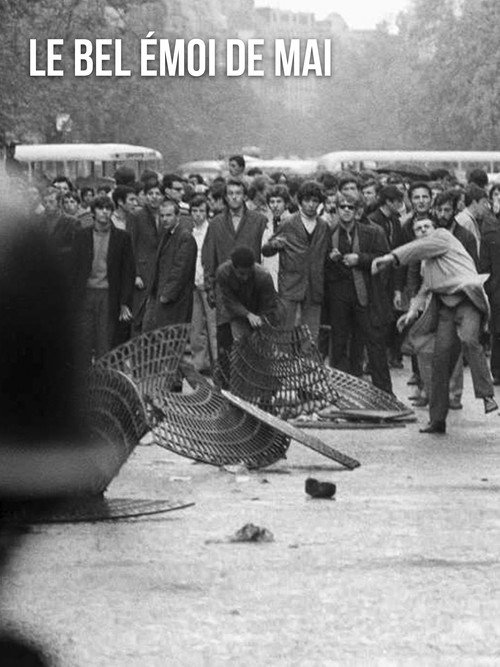
Le Bel émoi de mai 1968
Set in the electric spring of 1968, Le Bel émoi de mai (1968) captures the raw energy of Paris when students and workers rose up together.
Director: Jean-Denis Bonan
Frequently Asked Questions
What is Le Bel émoi de mai (1968) about?
Le Bel émoi de mai (1968) chronicles the spontaneous uprising in Paris during May 1968, blending documentary realism with poetic narration. The film immerses viewers in the protests, strikes, and barricades that reshaped French society, capturing both the chaos and the creative spirit of the era.
Who directed Le Bel émoi de mai?
Le Bel émoi de mai was directed by Jean-Denis Bonan, a filmmaker who used the camera as both witness and instrument to document the fervor of 1968.
Who stars in Le Bel émoi de mai?
Cast information is not available for Le Bel émoi de mai (1968).
Is Le Bel émoi de mai (1968) worth watching?
Though short in runtime, Le Bel émoi de mai (1968) packs a punch with its revolutionary imagery and poetic approach to history. Its blend of documentary and drama makes it a compelling watch for fans of political cinema and 1960s counterculture.
How long is Le Bel émoi de mai?
Le Bel émoi de mai (1968) has a runtime of 35 minutes.
About Le Bel émoi de mai (1968) — A 35-minute cinematic snapshot of Paris in revolt
Set in the electric spring of 1968, Le Bel émoi de mai (1968) captures the raw energy of Paris when students and workers rose up together. Directed by Jean-Denis Bonan, this short documentary-drama blends poetic imagery with historical urgency, weaving everyday voices into a chorus of rebellion. Filmed amid tear gas and barricades, the film transforms the city into a stage for spontaneous artistry, where slogans become graffiti and every street corner hums with defiance. The thirty-five-minute runtime is a lightning bolt of authenticity, condensing weeks of uprising into a visceral time-capsule that lingers long after the credits roll.
Le Bel émoi de mai is more than a historical record—it's a cinematic manifesto, part history lesson, part manifesto, part dream. Bonan's lens transforms chaos into choreography, turning cobblestones into stage props and voices into verses that still resonate decades later. Whether you're drawn by its revolutionary spirit, its lyrical approach, or its compact runtime, this 1968 gem offers a front-row seat to one of modern France's defining cultural moments.