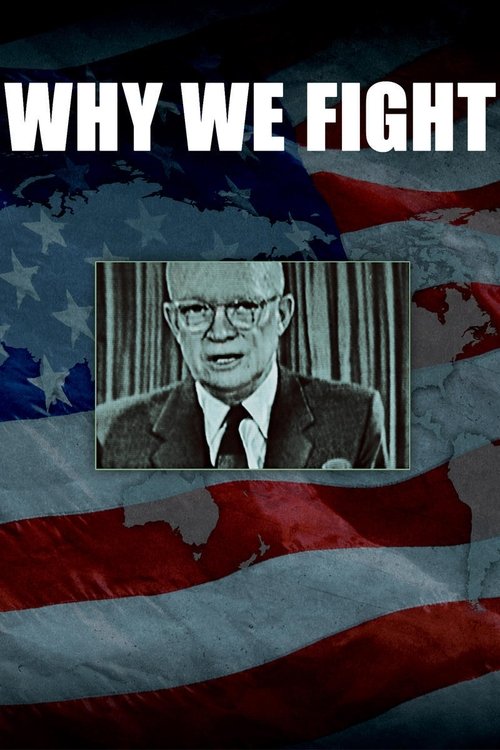
Why We Fight 2005
"It Is Nowhere Written That The American Empire Goes On Forever"
Eugene Jarecki's incisive 2005 documentary *Why We Fight* dissects the evolution of American military influence, probing whether foreign policy decisions are driven by a pursuit of global dominance.
Director: Eugene Jarecki
Cast





Frequently Asked Questions
What is *Why We Fight* (2005) about?
This documentary investigates the forces shaping American foreign policy, particularly the role of military supremacy in national decision-making. It questions whether the U.S. has become reliant on conflict and whether this reliance serves the public interest or the interests of a powerful few.
Who directed *Why We Fight*?
The film was directed by Eugene Jarecki, a filmmaker known for his critical examinations of American society and power structures.
Who stars in *Why We Fight*?
The documentary features prominent voices such as Chalmers Johnson, Joseph Cirincione, Gore Vidal, Charles Lewis, Richard Perle, and William Kristol.
Is *Why We Fight* (2005) worth watching?
As a sharp, thought-provoking documentary, *Why We Fight* offers a timely critique of military-industrial dynamics. Its blend of expert insight and compelling storytelling makes it a must-watch for anyone interested in the intersection of politics, history, and power.
How long is *Why We Fight*?
The film runs for 98 minutes.
🎥 Trailer
About Why We Fight (2005) — A probing look at America's military-industrial complex
Eugene Jarecki's incisive 2005 documentary *Why We Fight* dissects the evolution of American military influence, probing whether foreign policy decisions are driven by a pursuit of global dominance. Through sharp interviews with policy experts, historians, and critics like Gore Vidal, the film examines the growing entanglement of defense interests with national identity, questioning whether perpetual war has become ingrained in the fabric of American life.
With a tone that balances urgency and intellectual rigor, Jarecki crafts a polemic that challenges the notion that endless military supremacy is an inevitable or desirable path for the United States. The documentary weaves archival footage, candid conversations, and stark observations into a compelling argument about power, accountability, and the cost of empire—all while leaving audiences to consider what lies ahead for a nation at the crossroads of its own history.