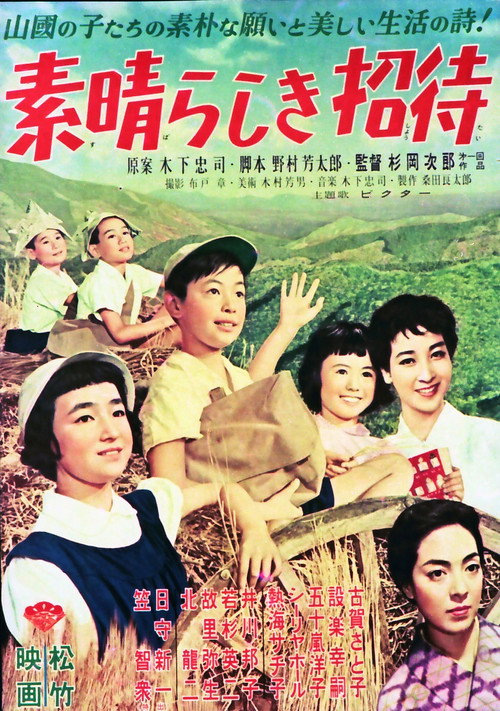
Subarashiki shōtai 1955
Step into post-war Japan with *Subarashiki shōtai* (1955), a compact yet evocative black-and-white film directed by Jirō Sugioka.
Director: Jirō Sugioka
Cast




Frequently Asked Questions
What is Subarashiki shōtai (1955) about?
This 65-minute Japanese film by Jirō Sugioka offers a poignant snapshot of life in the 1950s, following characters navigating personal and societal transformations after conflict. It's less about grand events and more about the quiet decisions that shape futures.
Who directed Subarashiki shōtai?
The film was directed by Jirō Sugioka, known for his sensitive portrayal of everyday human experiences in mid-century Japanese cinema.
Who stars in Subarashiki shōtai?
The cast includes Satoko Koga, Keiko Yukishiro, Kōji Shitara, Kuniko Igawa, and Fujio Suga, with supporting roles by 北龍子.
Is Subarashiki shōtai (1955) worth watching?
With its historically rich setting and intimate storytelling, *Subarashiki shōtai* (1955) appeals to fans of early Japanese cinema and short-form dramas. While not widely rated, its concise storytelling and cultural insights make it a rewarding watch for niche audiences.
How long is Subarashiki shōtai?
The runtime is 65 minutes.
About Subarashiki shōtai (1955) — A Glimpse into Post-War Japan's Quiet Moments
Step into post-war Japan with *Subarashiki shōtai* (1955), a compact yet evocative black-and-white film directed by Jirō Sugioka. Running just 65 minutes, this historical drama unfolds against the backdrop of a society rebuilding itself, focusing on everyday lives and quiet struggles. Sugioka crafts an intimate portrait where personal dreams intersect with collective resilience, blending subtle emotion with socio-cultural depth. The film's tone is reflective yet hopeful, capturing a moment when tradition and modernity clashed gently, just beneath the surface of ordinary routines.
Starring Satoko Koga, Keiko Yukishiro, and Kōji Shitara, the cast delivers understated performances that anchor the narrative in authenticity. While genre specifics remain unlisted, the story likely explores themes of identity, community, and the unspoken pressures of a changing era. Its concise runtime belies its emotional resonance, offering a slice-of-life glimpse that lingers long after the final frame. Ideal for fans of early Japanese cinema, *Subarashiki shōtai* (1955) stands as a testament to the power of small-scale storytelling.