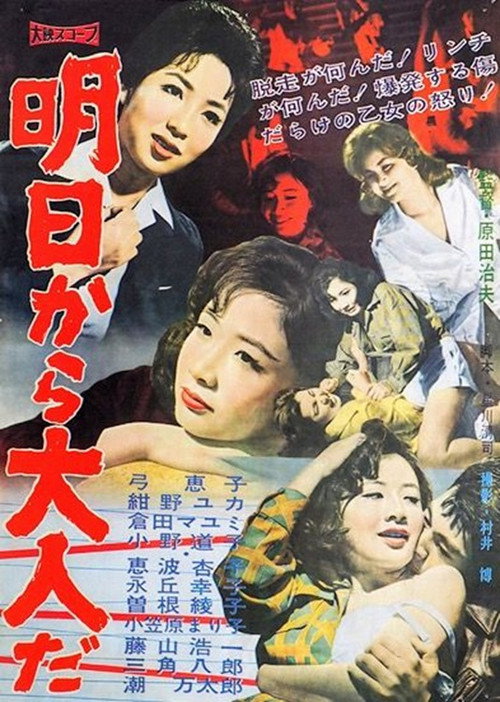
Ashita kara otona da 1960
Step into the post-war Japan of 1960 with *Ashita kara otona da*, a poignant Japanese drama directed by Haruo Harada.
Director: Haruo Harada
Cast





Frequently Asked Questions
What is Ashita kara otona da (1960) about?
This 1960 Japanese drama centers on young women in post-war Japan who must navigate the challenges of stepping into adulthood. Their journeys reveal the personal sacrifices and small victories that come with forging a path forward.
Who directed Ashita kara otona da?
Haruo Harada directed this film, bringing a sensitive touch to the themes of youth and responsibility.
Who stars in Ashita kara otona da?
The film features Keiko Yumi, Yuka Konno, Kyōko Enami, Ayako Sone, and Mariko Ogasawara as the young women at its heart.
Is Ashita kara otona da (1960) worth watching?
Though it's a short and lesser-known film, its emotional depth and nostalgic tone make it a rewarding watch for fans of character-driven dramas. Its themes of growth and resilience resonate universally.
How long is Ashita kara otona da?
The film runs for 67 minutes, offering a concise yet impactful viewing experience.
About Ashita kara otona da (1960) — A 1960s Japanese Drama of Growing Pains
Step into the post-war Japan of 1960 with *Ashita kara otona da*, a poignant Japanese drama directed by Haruo Harada. This slender yet impactful 67-minute film follows a group of young women navigating the delicate balance between adolescence and adulthood as they confront societal expectations and personal dreams. Set against a backdrop of rebuilding and shifting values, the story captures the quiet resilience of its protagonists—Keiko Yumi, Yuka Konno, and Kyōko Enami—whose paths intertwine as they grapple with decisions that will shape their futures. With a tone that blends nostalgia and determination, the film explores themes of identity, responsibility, and the bittersweet passage into maturity.
Harada's sensitive direction infuses the narrative with a delicate atmosphere, emphasizing the emotional weight of each character's choices rather than grand spectacle. The film's understated yet heartfelt approach makes it a reflective time capsule of 1960s Japan, where tradition clashes with the winds of change. While not widely celebrated in Western cinema circles, *Ashita kara otona da* (1960) stands as a tender reminder of the universal struggles of growing up, making it a hidden gem for fans of introspective, character-driven storytelling.