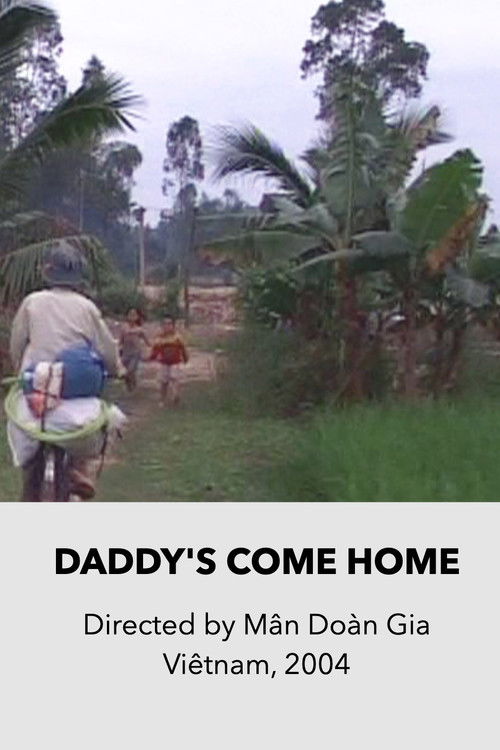
Daddy's Come Home 2004
In *Daddy's Come Home (2004)*, director Mân Doàn Gia captures the raw realities of Vietnam's working-class migrants.
Director: Mân Doàn Gia
Frequently Asked Questions
What is Daddy's Come Home (2004) about?
*Daddy's Come Home* follows rural migrants who travel to Hanoi as day laborers, waiting daily for jobs that may barely cover their needs. After exhausting work, some must choose between staying in the city or returning to their families in the countryside, where life is simpler but opportunities are scarce.
Who directed Daddy's Come Home?
The film was directed by Mân Doàn Gia, a filmmaker who often explores social and economic themes in Vietnamese society.
Who stars in Daddy's Come Home?
The documentary centers on a migrant worker surrounded by his peers, though the cast primarily consists of real-life laborers sharing their experiences rather than professional actors.
Is Daddy's Come Home (2004) worth watching?
As an unrated but deeply human documentary, *Daddy's Come Home* offers a rare glimpse into the lives of Vietnam's working poor. Its short runtime makes it an accessible yet impactful watch for those interested in social realism and migrant labor stories.
How long is Daddy's Come Home?
The film runs for 41 minutes.
About Daddy's Come Home (2004) — A 41-Minute Look at Vietnam's Working-Class Struggles
In *Daddy's Come Home (2004)*, director Mân Doàn Gia captures the raw realities of Vietnam's working-class migrants. The 41-minute documentary follows day laborers who travel from rural villages to Hanoi in search of better wages, only to face grueling conditions and long separations from their families. Through the eyes of one man amid a circle of neighbors, the film contrasts the hustle of city life with the quiet resilience of country living.
The atmosphere is one of quiet urgency, as the protagonist shares the daily struggles of earning enough to survive—whether through backbreaking construction work or the emotional toll of delayed reunions with wives and children. Director Mân Doàn Gia crafts a poignant snapshot of economic disparity, where labor is a commodity traded in the streets, and homecoming becomes a fleeting luxury.