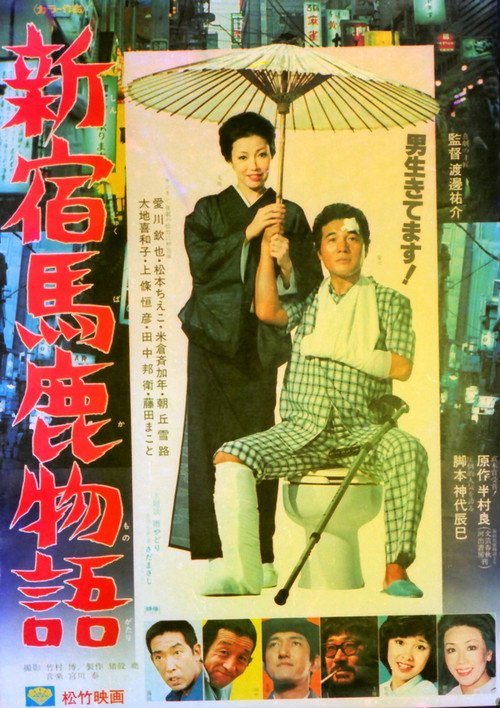
Shinjuku baka monogatari 1977
Dive into the gritty, neon-soaked streets of 1970s Tokyo with *Shinjuku baka monogatari (1977)*, a cult classic that paints a raw portrait of youth rebellion and urban alienation.
Director: Yūsuke Watanabe
Cast



Frequently Asked Questions
What is Shinjuku baka monogatari (1977) about?
This 1977 Japanese drama follows a young man adrift in the chaotic energy of Shinjuku, where the allure of freedom clashes with the loneliness of aimless ambition. As he drifts through the city's underbelly, the film paints a stark picture of a generation caught between idealism and disillusionment.
Who directed Shinjuku baka monogatari?
Yūsuke Watanabe directed *Shinjuku baka monogatari*, crafting a visually striking and thematically rich portrait of 1970s Tokyo.
Who stars in Shinjuku baka monogatari?
The film stars Kin'ya Aikawa in the lead role, with Kiwako Taichi, Yukiji Asaoka, and Makoto Fujita rounding out the ensemble cast.
Is Shinjuku baka monogatari (1977) worth watching?
While not widely known outside Japan, *Shinjuku baka monogatari* offers a fascinating glimpse into the cultural and social tensions of its time. Fans of gritty, character-driven dramas with a historical edge will find it a compelling watch, especially for its unfiltered portrayal of urban life.
How long is Shinjuku baka monogatari?
The runtime for *Shinjuku baka monogatari* is 91 minutes.
About Shinjuku baka monogatari (1977) — A gritty 1970s Tokyo tale of rebellion and urban alienation
Dive into the gritty, neon-soaked streets of 1970s Tokyo with *Shinjuku baka monogatari (1977)*, a cult classic that paints a raw portrait of youth rebellion and urban alienation. Directed by Yūsuke Watanabe, this Japanese drama unfolds in the chaotic heart of Shinjuku, where the clash of tradition and modernity breeds disillusionment. Kin'ya Aikawa stars as a restless protagonist navigating a world of fleeting connections and hollow ambitions, while Kiwako Taichi and Yukiji Asaoka bring depth to the supporting cast, embodying the era's restless spirit. The film's stark black-and-white cinematography mirrors the cold detachment of its characters, creating an atmosphere that's both melancholic and electrifying.
At its core, *Shinjuku baka monogatari* explores the futility of searching for meaning in a city that devours its own dreams. The narrative weaves together fragments of urban life—late-night diners, cramped apartments, and the relentless hum of a metropolis in flux—into a story about the cost of chasing illusions. With its unflinching gaze and understated intensity, Watanabe's film captures a moment when Japan's post-war optimism collided with the harsh realities of modern existence, leaving its characters—and its audience—searching for answers in the shadows of Shinjuku's towering signs and unforgiving streets.