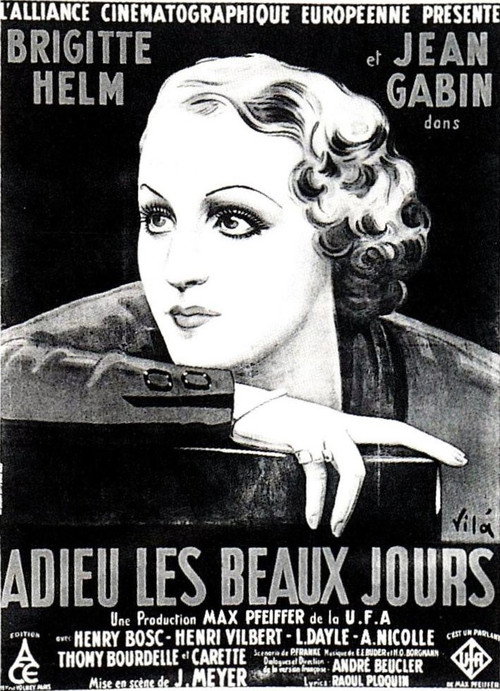
Goodbye Beautiful Days 1933
In the stylish pre-war comedy-drama *Goodbye Beautiful Days (1933)*, directed by André Beucler, a captivating tale of redemption unfolds against the gritty backdrop of early 20th-century Paris.
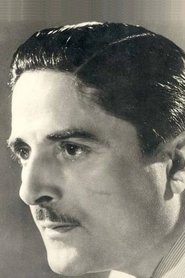
Director: André Beucler
Cast

Frequently Asked Questions
What is *Goodbye Beautiful Days (1933)* about?
The film follows Olga, a glamorous thief who tries to leave her criminal life behind after falling for a young engineer. Her efforts are complicated by her awkward former accomplices, leading to a bittersweet confrontation with both love and justice.
Who directed *Goodbye Beautiful Days*?
*Goodbye Beautiful Days* was directed by André Beucler, a filmmaker known for blending drama and comedy in his works.
Who stars in *Goodbye Beautiful Days*?
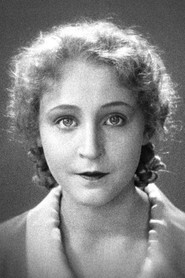
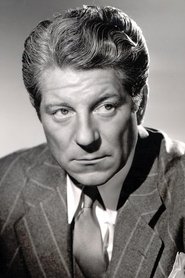
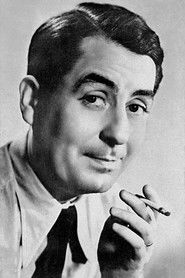
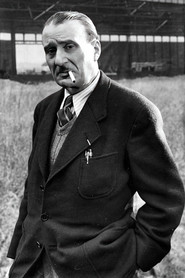
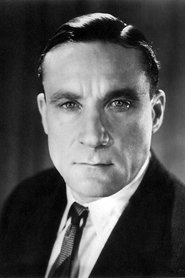
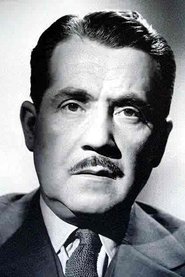
The film features Brigitte Helm as Olga, Jean Gabin as Pierre Lavernay, alongside Henri Bosc, Julien Carette, and Lucien Dayle in pivotal roles.
Is *Goodbye Beautiful Days (1933)* worth watching?
Though unrated on IMDb, *Goodbye Beautiful Days* is a charming slice of early talkie cinema, offering a mix of humor, drama, and nostalgic 1930s flair. Fans of classic European films or Brigitte Helm's performances may find it particularly compelling.
How long is *Goodbye Beautiful Days*?
*Goodbye Beautiful Days* runs for 96 minutes.
About Goodbye Beautiful Days (1933) — A 1930s Comedy-Drama of Love and Redemption
In the stylish pre-war comedy-drama *Goodbye Beautiful Days (1933)*, directed by André Beucler, a captivating tale of redemption unfolds against the gritty backdrop of early 20th-century Paris. Brigitte Helm stars as Olga, a dazzling yet troubled thief whose life takes a dramatic turn when she falls for Pierre Lavernay (Jean Gabin), a young engineer. Desperate to leave her criminal past behind, Olga's noble intentions are derailed by the clumsy interference of her former accomplices, pushing her into a tangled web of deception and heartbreak. The film blends sharp humor with poignant drama, exploring themes of love, loyalty, and the struggle for second chances, all wrapped in a nostalgic 1930s aesthetic that lingers long after the credits roll.
Helm's magnetic performance anchors this bittersweet narrative, while Gabin's brooding charm adds depth to a story where passion collides with fate. Beucler's direction infuses the film with a mix of charm and tension, capturing the fleeting beauty of fleeting relationships and the harsh realities of redemption. *Goodbye Beautiful Days (1933)* is a forgotten gem of European cinema, offering a rare glimpse into the transition from silent films to the talkies, where every frame feels alive with the spirit of its era.