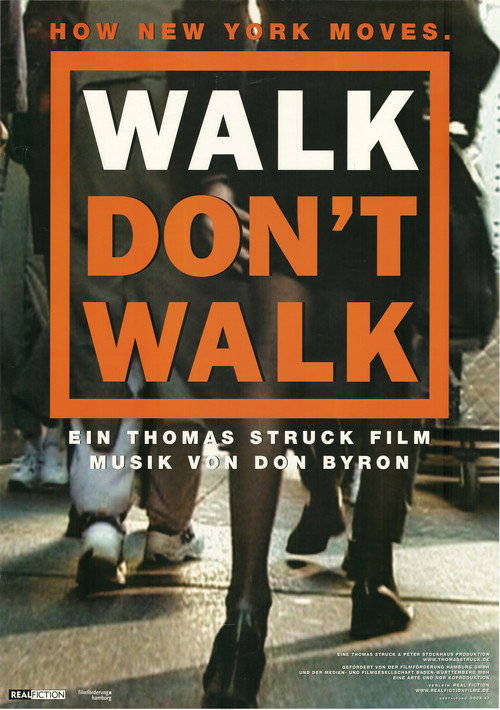
Walk Don't Walk 2002
Dive into the pulse of Manhattan with *Walk Don't Walk* (2002), a hypnotic documentary that turns city streets into a symphony of motion. Director Thomas Struck captures the relentless rhythm of urban life from an intimate, ground-level perspective—where every step tells a story.
Director: Thomas Struck
Cast
Frequently Asked Questions
What is Walk Don't Walk (2002) about?
*Walk Don't Walk* (2002) is a jazz-infused documentary that captures the relentless motion of Manhattan life. Director Thomas Struck films the city's sidewalks from a ground-level perspective, turning the rhythm of footsteps into a visual and auditory experience. The film contrasts the mundane with the extraordinary, from daily commutes to athletic feats, all set to a soundtrack by clarinetist Don Byron.
Who directed Walk Don't Walk?
Thomas Struck directed *Walk Don't Walk* (2002). His innovative approach blends documentary realism with artistic abstraction, creating a unique portrait of urban life.
Who stars in Walk Don't Walk?
The documentary features clarinetist Don Byron and Dian Hanson, editor of a renowned adult magazine, as key voices in this rhythmic exploration of Manhattan.
Is Walk Don't Walk (2002) worth watching?
*Walk Don't Walk* (2002) is a niche but mesmerizing watch for fans of experimental documentaries and jazz music. While it's unrated on IMDb, its creative vision and atmospheric soundtrack make it a standout for those seeking something different. The film's 60-minute runtime keeps it tight and engaging.
How long is Walk Don't Walk?
The film runs for 60 minutes, offering a concise yet immersive experience.
About Walk Don't Walk (2002) — A Jazz-Powered Ode to Manhattan's Chaotic Rhythm
Dive into the pulse of Manhattan with *Walk Don't Walk* (2002), a hypnotic documentary that turns city streets into a symphony of motion. Director Thomas Struck captures the relentless rhythm of urban life from an intimate, ground-level perspective—where every step tells a story. Clarinetist Don Byron weaves jazz melodies from the city's chaotic beats, while Dian Hanson, editor of a provocative magazine, offers a candid lens on the extremes of urban existence. The film dances between the ordinary and the extraordinary, from commuters rushing to work to marathon runners pushing limits, all set to a soundtrack that elevates the everyday into art.
At its core, *Walk Don't Walk* (2002) explores the fine line between purpose and excess, blending documentary realism with rhythmic abstraction. Struck's camera lingers on feet in motion, each set of legs carrying its own narrative—some hurried, some hesitant, some lost in thought. The interplay of sound and movement transforms New York's sidewalks into a living, breathing composition, where even a misstep becomes part of the melody.