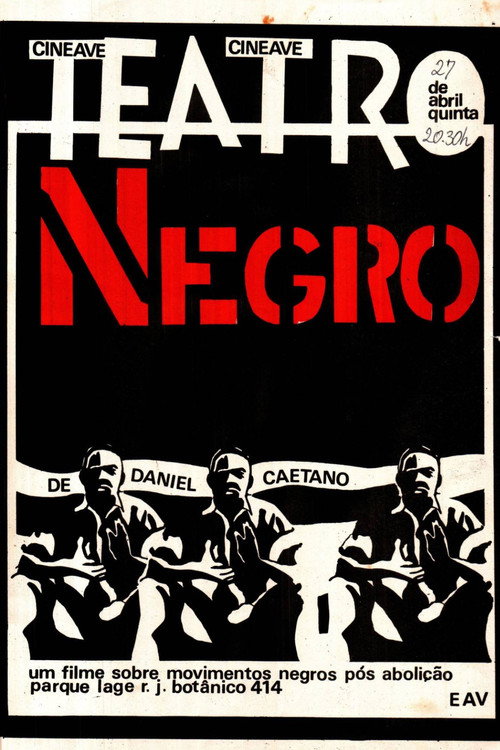
Teatro Negro 1978
Step into the vivid world of 1970s Brazilian documentary filmmaking with *Teatro Negro* (1978), directed by Daniel Caetano.
Director: Daniel Caetano
Frequently Asked Questions
What is Teatro Negro (1978) about?
*Teatro Negro* (1978) is a documentary that explores the cultural and social landscape of Brazil through the lens of theater. It captures the spirit of artistic resistance and the role of performance in shaping national identity during a transformative era.
Who directed Teatro Negro?
Daniel Caetano directed *Teatro Negro* (1978). He is known for his contributions to Brazilian documentary cinema, though specific details about his career are not widely documented.
Who stars in Teatro Negro?
The lead cast of *Teatro Negro* (1978) is not listed, as the film focuses more on the collective movement it documents rather than individual performances.
Is Teatro Negro (1978) worth watching?
While *Teatro Negro* (1978) may not appeal to everyone due to its niche focus, it offers valuable insights for film enthusiasts and those interested in Brazilian cultural history. Its documentary style and thematic depth make it a worthy watch for those seeking thought-provoking cinema.
How long is Teatro Negro?
Runtime details for *Teatro Negro* (1978) are not listed.
About Teatro Negro (1978) — Discover the Raw Energy of 1970s Brazilian Documentary Cinema
Step into the vivid world of 1970s Brazilian documentary filmmaking with *Teatro Negro* (1978), directed by Daniel Caetano. This intriguing cinematic work immerses audiences in the raw, unfiltered energy of its era, capturing the essence of social and cultural movements through the lens of the stage. The film dives deep into themes of identity, resistance, and artistic expression, painting a portrait of a nation in flux. With a focus on the theatrical arts, *Teatro Negro* (1978) blends documentary realism with the passion of live performance, offering viewers a glimpse into the creative spirit that defined a generation. Whether you're a film historian, a theater enthusiast, or simply curious about the power of documentary storytelling, this film delivers a compelling narrative that resonates decades later.
While specific cast details for *Teatro Negro* (1978) remain elusive, the film's strength lies in its ability to transcend individual performances, focusing instead on the collective energy of the movement it documents. The documentary genre itself serves as a vessel for exploring broader societal themes, making *Teatro Negro* (1978) a must-watch for those who appreciate cinema that challenges and inspires. Available on multiple platforms, this film is accessible to a wide audience, ensuring that its story continues to be told and celebrated.