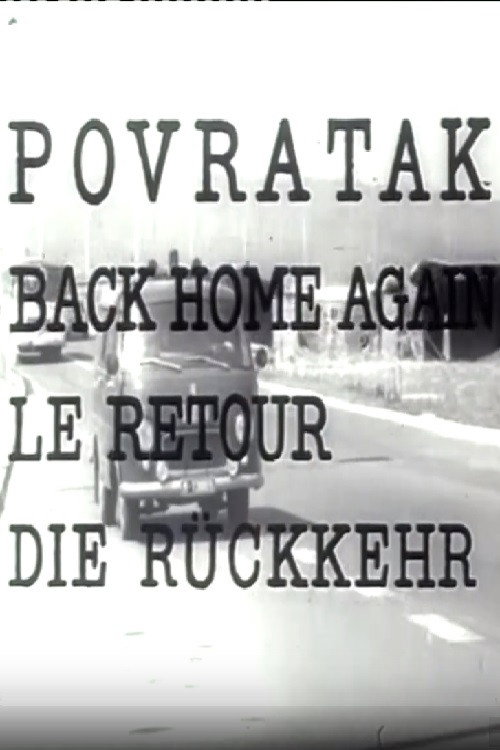
The Return 1975
In Petar Krelja's gripping short documentary from 1975, *The Return* unpacks a poignant human story set against the backdrop of Cold War-era Yugoslavia.
Director: Petar Krelja
Frequently Asked Questions
What is *The Return (1975)* about?
*The Return* follows a young girl named Milka, intercepted at Zagreb Airport while trying to escape Yugoslavia to reunite with her aunt in Germany. The film documents her tense interaction with social services and the eventual decision to return her to her divorced parents, highlighting the emotional and bureaucratic hurdles she faces.
Who directed *The Return*?
Director information is not available.
Who stars in *The Return*?
The documentary features Milka, the social worker, and her divorced parents as the central characters.
Is *The Return (1975)* worth watching?
As a 14-minute documentary, *The Return* offers a compelling glimpse into Cold War-era struggles and personal resilience. While its brevity may limit depth, its emotional resonance and historical context make it a compelling watch for documentary enthusiasts.
How long is *The Return*?
The runtime of *The Return* is 14 minutes.
About The Return (1975) — A Short Documentary on Family and Freedom
In Petar Krelja's gripping short documentary from 1975, *The Return* unpacks a poignant human story set against the backdrop of Cold War-era Yugoslavia. When young Milka is intercepted at Zagreb airport, desperate to flee to her aunt in Germany, she finds herself caught between bureaucracy and fractured family ties. The film follows her journey as a social worker attempts to place her in a home for neglected children, only to reunite her with her divorced parents—a decision fraught with emotional weight and societal tension. Krelja crafts a quiet yet powerful narrative, blending observational realism with intimate character moments to explore themes of displacement, belonging, and the fragility of human connections.
Shot in stark black-and-white, *The Return (1975)* immerses viewers in a world where bureaucracy clashes with raw emotion, mirroring the ideological divides of the era. The documentary's strength lies in its understated storytelling, avoiding sensationalism to focus on the quiet desperation of Milka's situation. Krelja's direction ensures the film resonates not just as a historical artifact but as a timeless reflection on the cost of freedom and the enduring need for home.