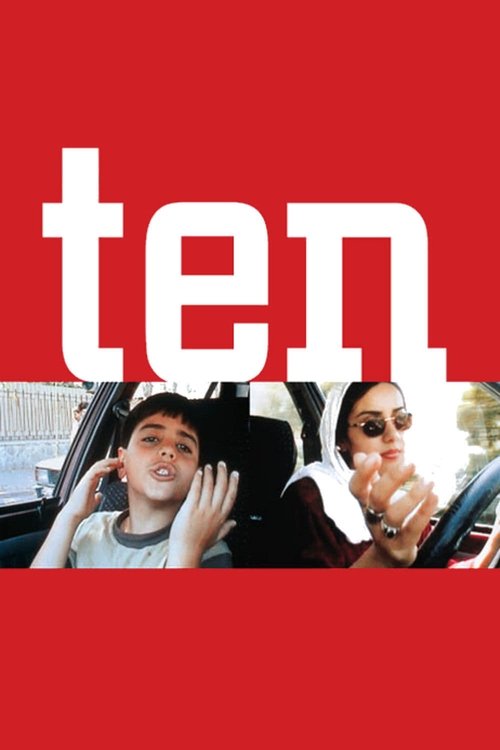
Ten 2002
Abbas Kiarostami's *Ten (2002)* transforms a simple car into a moving canvas for raw, unfiltered conversation.
Director: Abbas Kiarostami
Cast


Frequently Asked Questions
What is *Ten* (2002) about?
*Ten* follows a woman navigating the streets of Tehran as she picks up passengers who shape her journey. Each ride becomes a window into personal struggles, societal pressures, and the search for connection in a rapidly changing Iran. The film thrives on its unadorned dialogue, turning a routine commute into a profound meditation on life.
Who directed *Ten*?
*Ten* was directed by Abbas Kiarostami, the celebrated Iranian filmmaker known for his minimalist yet deeply humanistic storytelling.
Who stars in *Ten*?
The film stars Mania Akbari as the central driver, alongside Amina Maher, Kamran Adl, Roya Arabshahi, and Mandana Sharbaf in pivotal passenger roles.
Is *Ten* (2002) worth watching?
While *Ten* (2002) may not be for everyone due to its deliberate pacing, its authenticity and emotional depth make it a rewarding experience for fans of character-driven dramas. The film's exploration of personal and societal themes elevates it beyond a simple road movie, offering a unique perspective on Iranian life.
How long is *Ten*?
*Ten* runs for 94 minutes.
About *Ten* (2002) — A Glimpse Inside Tehran Through One Woman's Car
Abbas Kiarostami's *Ten (2002)* transforms a simple car into a moving canvas for raw, unfiltered conversation. Over ninety-four minutes, the film unfolds as a series of intimate dialogues between a Tehran woman driving through the city and her passengers—a mix of family, strangers, and voices of modern Iranian society. From a chatty, philosophical young boy to a grieving mother, each encounter peels back layers of personal and societal tension, revealing the complexities of life in post-revolutionary Iran. Shot entirely inside a car with minimalist staging, Kiarostami crafts a visually restrained yet emotionally charged drama that feels like eavesdropping on life itself.
Grounded in realism, *Ten (2002)* explores themes of gender, faith, and resilience through the lens of everyday interactions. The director's signature observational style strips away spectacle, focusing instead on the authenticity of each conversation. With its quiet intensity and deliberate pacing, the film invites viewers to reflect on the stories unfolding just beyond their own windshields. Whether you're drawn to Iranian cinema or simply love character-driven storytelling, Kiarostami's masterful use of confined space and natural dialogue makes this a standout in contemporary world cinema.