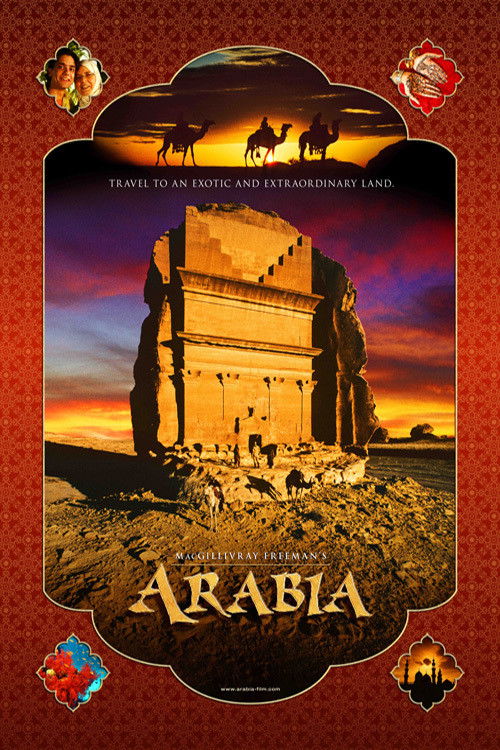
MacGillivray Freeman's Arabia 2010
In *MacGillivray Freeman's Arabia (2010)*, a spirited young filmmaker takes on a deeply personal quest to capture the soul of his homeland.
Frequently Asked Questions
What is MacGillivray Freeman's Arabia (2010) about?
This 40-minute documentary follows Hamzah Jamjoom, a passionate Saudi student, as he returns from studying in Chicago to document his native culture through film. Through his journey, the movie explores themes of identity, tradition, and the clash between modernity and heritage.
Who directed MacGillivray Freeman's Arabia?
Director information is not available.
Who stars in MacGillivray Freeman's Arabia?
The film centers on Hamzah Jamjoom as the protagonist, with additional contributions from local figures and community members who appear on screen.
Is MacGillivray Freeman's Arabia (2010) worth watching?
As a concise documentary, it offers a unique perspective on Arabian culture through the eyes of a young filmmaker. While it's a niche watch, its intimate storytelling and visual charm make it engaging for fans of cultural films and travelogues.
How long is MacGillivray Freeman's Arabia?
The runtime is 40 minutes.
About MacGillivray Freeman's Arabia (2010) — A Young Filmmaker's Journey Through His Homeland
In *MacGillivray Freeman's Arabia (2010)*, a spirited young filmmaker takes on a deeply personal quest to capture the soul of his homeland. Hamzah Jamjoom, a 22-year-old charmer fresh from Chicago's DePaul University, returns to Saudi Arabia with a camera and a dream—to document his native culture through his own lens. As he navigates the bustling streets, ancient traditions, and modern contradictions of his homeland, the film becomes more than just a project; it's a poetic journey of self-discovery and connection.
This 40-minute documentary unfolds like an intimate travelogue, blending vibrant visuals with Hamzah's genuine curiosity about his roots. The film immerses viewers in the rich tapestry of Arabian life, from the warmth of its people to the stark beauty of its landscapes, all while questioning what it means to belong. It's a celebration of cultural identity and the universal power of storytelling.