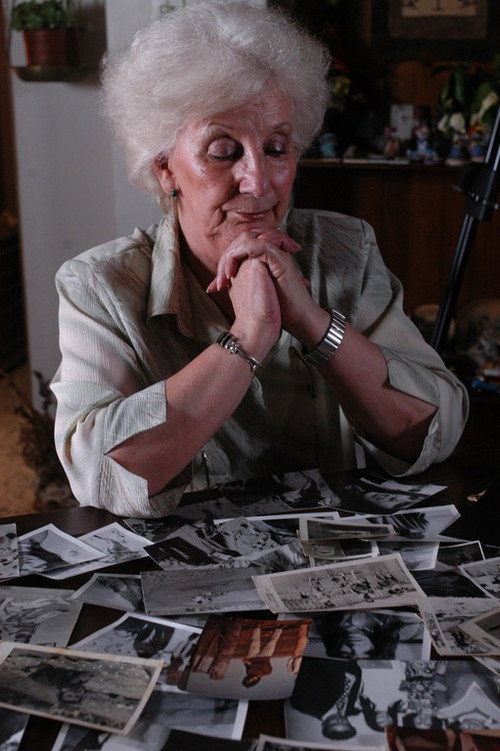
Estela 2009
"“Let him know that I’m waiting for him, that I’m looking for him, that he finds me, that he lets me find him…” says Estela."
In *Estela (2009)*, director Silvia Di Florio crafts a deeply personal documentary that unfolds like a whispered confession to a missing grandson.
Director: Silvia Di Florio
Cast
Frequently Asked Questions
What is Estela (2009) about?
This documentary follows Estela de Carlotto, head of the Grandmothers of Plaza de Mayo, as she reconstructs her family's tragic history for her grandson Guido. Stolen during Argentina's dictatorship, Guido's story is told through Estela's memories, photos, and a direct, emotional appeal to him across time.
Who directed Estela?
The film was directed by Silvia Di Florio, a filmmaker known for her sensitive approach to human stories.
Who stars in Estela?
The documentary features Estela de Carlotto as the central figure, accompanied by poignant interviews and archival footage of her daughter, Laura.
Is Estela (2009) worth watching?
As a powerful historical documentary, *Estela* offers a rare glimpse into one of Argentina's most harrowing chapters. Its emotional depth and strong storytelling make it a compelling watch for those interested in documentaries about justice, memory, and family.
How long is Estela?
The film has a runtime of 63 minutes.
🎥 Trailer
About Estela (2009): A Mother's Search for Lost Identity — Full Movie Info
In *Estela (2009)*, director Silvia Di Florio crafts a deeply personal documentary that unfolds like a whispered confession to a missing grandson. Through intimate conversations and a sparse, memory-strewn home, Estela de Carlotto—President of the Grandmothers of Plaza de Mayo—reconstructs her family's tragic history for Guido, her grandson stolen during Argentina's dictatorship. With quiet urgency, she shares stories of her daughter Laura's life, her own relentless search, and the love that fuels her decades-long quest for justice. Shot in stark, understated tones, the film transforms a mother's plea into a haunting meditation on identity, loss, and the unbreakable bonds of family.
The documentary's power lies in its raw simplicity. Estela's direct address to the camera, as if speaking across time, bridges memory with reality. The absence of Guido—who would have turned 33 in the year the film was made—looms large, making each photograph and memory a lifeline. Di Florio's sensitive direction captures not just a search for truth, but the weight of history itself, leaving viewers with a lingering sense of both sorrow and hope.