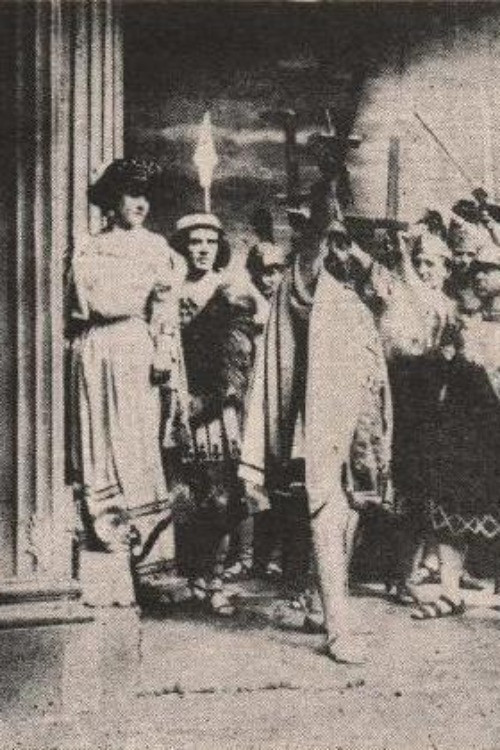
Fedra 1909
Fedra (1909) delivers a dramatic and fantastical take on the timeless Greek myth, directed by Oreste Gherardini. The film unfolds in vivid, hand-colored sequences as Fedra, the passionate queen of Athens, becomes consumed by forbidden desire for her step-son Hippolytus.
Director: Oreste Gherardini
Cast
Frequently Asked Questions
What is Fedra (1909) about?
Fedra portrays the Greek queen's doomed obsession with her step-son Hippolytus, who rejects her advances. Fuelled by humiliation, she exacts a bitter revenge that sets the stage for a tragic confrontation rooted in ancient myth. The film adapts the timeless drama with a focus on emotional intensity and visual storytelling.
Who directed Fedra?
Oreste Gherardini directed Fedra (1909), bringing a theatrical flair to the early silent film's cinematic adaptation of Greek tragedy.
Who stars in Fedra?
The film features Carlo Duse, Ciro Galvani, and Italia Vitaliani in key roles, with Vitaliani delivering a standout performance as Queen Fedra.
Is Fedra (1909) worth watching?
While it's a brief nine-minute silent drama, Fedra offers a fascinating glimpse into early 20th-century cinema and mythological storytelling. Its emotional depth and hand-colored visuals make it a compelling watch for fans of silent films or classic adaptations, despite its age.
How long is Fedra?
Fedra runs for just 9 minutes, making it a concise yet powerful silent-era drama.
About Fedra (1909) — A Classic Greek Tragedy Reimagined in Silent Cinema
Fedra (1909) delivers a dramatic and fantastical take on the timeless Greek myth, directed by Oreste Gherardini. The film unfolds in vivid, hand-colored sequences as Fedra, the passionate queen of Athens, becomes consumed by forbidden desire for her step-son Hippolytus. When her advances are met with rejection, she turns to vengeance, unleashing a cycle of tragedy steeped in ancient drama and mythological tension. Italia Vitaliani, a celebrated stage actress and cousin of the legendary Eleonora Duse, brings depth and intensity to the role of Fedra, embodying both vulnerability and ruthless determination. Set against a backdrop of ornate interiors and mythic grandeur, the short film blends fantasy with raw emotional power, offering a glimpse into early Italian cinema's artistic ambition.
This silent-era masterpiece stands out for its rich visual storytelling and emotional resonance, capturing the myth not just as a historical tale but as a deeply human drama. Gherardini's direction infuses the narrative with a haunting atmosphere, while the cast's performances elevate the story beyond mere spectacle. Fedra remains a fascinating artifact of early filmmaking, where restraint and expression merge to create something unforgettable.