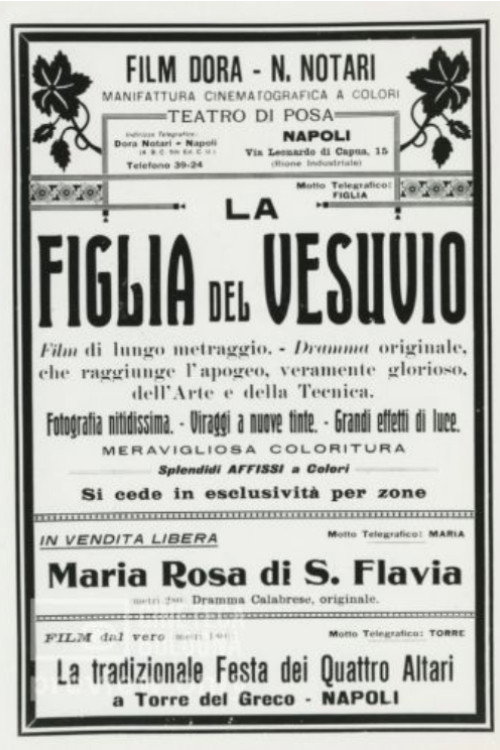
The Daughter of Vesuvius 1912
The Daughter of Vesuvius (1912) stands as a fascinating artifact from cinema's formative years, representing the creative vision of pioneering filmmaker Elvira Notari.
Director: Elvira Notari
Cast
Frequently Asked Questions
What is The Daughter of Vesuvius (1912) about?
The film appears to center around themes connected to Mount Vesuvius, likely exploring human stories set against the dramatic Neapolitan landscape. As a silent production from 1912, it would have employed visual storytelling and intertitles to convey its narrative about a daughter figure and her relationship with the iconic volcanic setting.
Who directed The Daughter of Vesuvius?
The film was directed by Elvira Notari, a pioneering figure in early Italian cinema and one of the first prominent female filmmakers in history.
Who stars in The Daughter of Vesuvius?
Eduardo Notari appears to be featured in the cast of this early silent production, working alongside his collaborator Elvira Notari.
Is The Daughter of Vesuvius (1912) worth watching?
While not rated on IMDb, this film holds significant historical value for silent cinema enthusiasts. Its importance lies in Elvira Notari's directorial contribution to early filmmaking, making it essential viewing for those interested in cinema history rather than conventional entertainment.
How long is The Daughter of Vesuvius?
The film runs for approximately 34 minutes, typical of early silent productions that often featured shorter runtimes compared to modern cinema.
About The Daughter of Vesuvius (1912) — Silent Film Historical Treasure
The Daughter of Vesuvius (1912) stands as a fascinating artifact from cinema's formative years, representing the creative vision of pioneering filmmaker Elvira Notari. This brief 34-minute silent production offers a glimpse into early 20th-century storytelling techniques, crafted during an era when narrative cinema was still discovering its language. The film's connection to the legendary Vesuvius volcano suggests themes of natural power and perhaps human drama against an iconic backdrop.
Directed by Elvira Notari, one of the earliest prominent female voices in film, The Daughter of Vesuvius showcases the collaborative spirit of early cinema through her work with Eduardo Notari. While genre details remain unclear, silent films of this period often explored melodrama, historical themes, or character studies. The short runtime makes it accessible for viewers interested in cinematic history and the evolution of visual storytelling.
For enthusiasts of vintage cinema and those curious about the roots of filmmaking, The Daughter of Vesuvius (1912) provides valuable insight into early Italian cinema. Its historical significance outweighs conventional entertainment value, making it essential viewing for film scholars and anyone fascinated by the medium's humble beginnings.