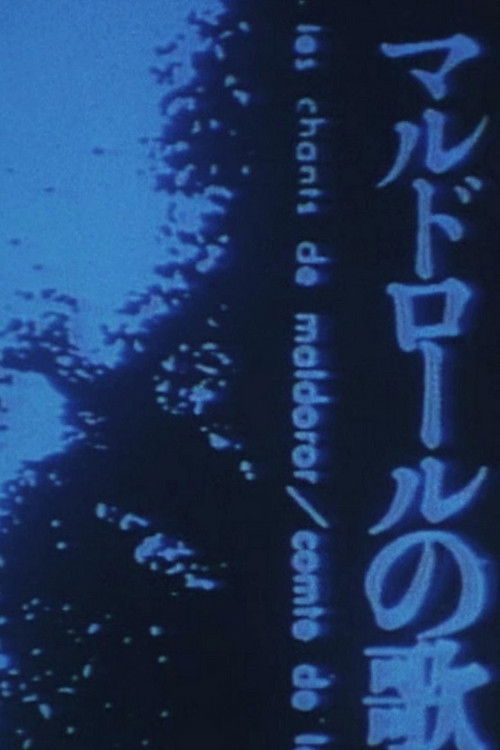
Les chants de Maldoror 1978
Shūji Terayama's *Les chants de Maldoror* (1978) transforms Comte de Lautréamont's hallucinatory 1869 novel into a feverish visual and textual collage.
Director: Shūji Terayama
Cast


Frequently Asked Questions
What is Les chants de Maldoror (1978) about?
This avant-garde short reimagines Lautréamont's 1869 poetic novel as a visual and textual odyssey. A young misanthrope drifts through a world where chance encounters—with animals, objects, and other wanderers—unfold in a surreal dreamscape blending poetry and rebellion.
Who directed Les chants de Maldoror?
The film was directed by Japanese avant-garde artist and filmmaker Shūji Terayama, known for pushing the boundaries of experimental cinema and blending literature with visual art.
Who stars in Les chants de Maldor (1978)?
The cast includes Keiko Niitaka, Susumu Oono, and Yoko Ran, who embody the enigmatic characters populating Terayama's surreal narrative.
Is Les chants de Maldoror (1978) worth watching?
With its short runtime and avant-garde style, *Les chants de Maldoror* appeals most to fans of experimental cinema and literary adaptations. Its dreamlike intensity and Surrealist themes make it a rewarding but challenging watch, especially for those drawn to poetic visual storytelling.
How long is Les chants de Maldoror?
The runtime is approximately 30 minutes.
About Les chants de Maldoror (1978) — Exploring Surrealist Poetry Through Experimental Cinema
Shūji Terayama's *Les chants de Maldoror* (1978) transforms Comte de Lautréamont's hallucinatory 1869 novel into a feverish visual and textual collage. This 30-minute 'reading film' merges Surrealist poetry with experimental cinema, where a disillusioned young rebel drifts through a hallucinatory dreamscape of chance encounters and bizarre alliances. Keiko Niitaka, Susumu Oono, and Yoko Ran populate a world where turtles, birds, and snails share the frame with human wanderers, all gliding over the pages of open books like figures in a half-remembered dream.
The atmosphere crackles with a mix of decadent beauty and unsettling absurdity, echoing Lautréamont's iconic line that beauty is 'the chance encounter of a sewing machine and an umbrella on an operating table.' Terayama's signature surrealism imbues every frame with playful menace, turning Maldoror's poetic misanthropy into a hypnotic, open-ended meditation on destruction, chance, and the fluid boundaries between text and reality.