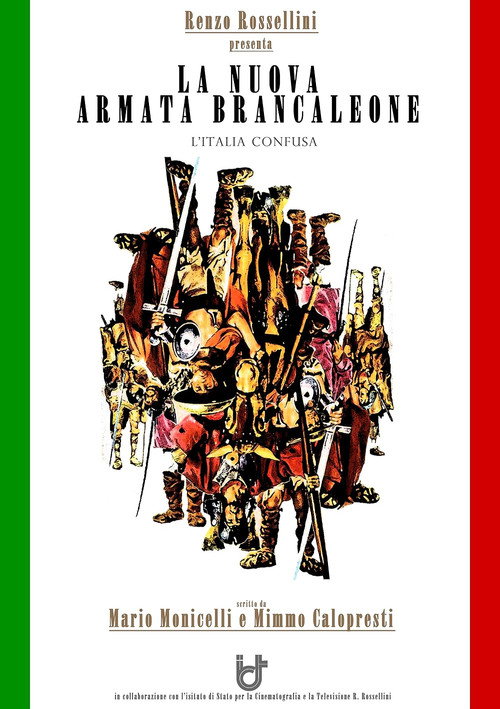
The New Brancaleone's Army 2010
Mario Monicelli's *The New Brancaleone's Army* (2010) delivers a sharp, satirical punch in just five minutes, blending absurd humor with biting social commentary.
Director: Mario Monicelli
Cast
Frequently Asked Questions
What is *The New Brancaleone's Army* (2010) about?
This short film follows a man who struggles to open a garage door, his clumsy efforts devolving into technical chaos and a sudden protest over cultural funding cuts. The brief runtime turns a mundane moment into a sharp commentary on frustration and systemic failure.
Who directed *The New Brancaleone's Army*?
The film was directed by Mario Monicelli, the legendary Italian filmmaker celebrated for his sharp satires and critiques of societal norms.
Who stars in *The New Brancaleone's Army*?
Roberto Renna takes the lead role in this short film, embodying the everyman caught in a bizarre and frustrating situation.
Is *The New Brancaleone's Army* (2010) worth watching?
Given its five-minute runtime and lack of IMDb rating, it's a niche pick—best for fans of Monicelli's work or those curious about experimental short films. Its ambition outweighs its brevity, making it a thought-provoking one-off rather than a must-see.
How long is *The New Brancaleone's Army*?
The film runs for five minutes, offering a tight, impactful experience.
About The New Brancaleone's Army (2010) — A five-minute satire of bureaucracy and artistic censorship
Mario Monicelli's *The New Brancaleone's Army* (2010) delivers a sharp, satirical punch in just five minutes, blending absurd humor with biting social commentary. The film follows a bumbling man who stumbles upon a locked garage, his frantic attempts to open it sparking laughter from the audience—only for his hapless struggle to dissolve into technical glitches and a sudden black screen. Protest signs against cultural cuts flash into view, leaving viewers to question the boundaries between performance and real-world frustrations. Monicelli, known for his sharp wit and critique of societal norms, crafts a micro-narrative that feels both timeless and eerily contemporary.
The atmosphere is chaotic yet deliberate, with the film's brevity amplifying its impact. As a drama with comedic undertones, it challenges expectations, using minimalism to provoke reflection on art, censorship, and the absurdity of bureaucracy. The director's signature style shines through, offering a microcosm of larger themes in just a few short moments.