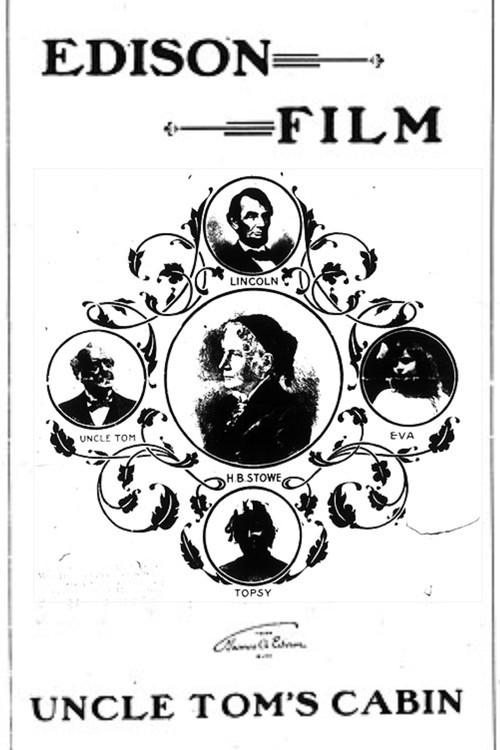
Uncle Tom's Cabin 1903
Edwin S. Porter's 1903 silent adaptation of Harriet Beecher Stowe's powerful novel *Uncle Tom's Cabin* captures the harrowing struggle for freedom in pre-Civil War America with stark emotional intensity.
Director: Edwin S. Porter
Frequently Asked Questions
What is Uncle Tom's Cabin (1903) about?
This early silent film follows two enslaved people whose lives diverge dramatically: Eliza escapes across a frozen river with her young child to evade slave traders, while Tom's unwavering loyalty is exploited by successive owners. The story weaves together themes of courage, betrayal, and the brutal realities of slavery in 19th-century America.
Who directed Uncle Tom's Cabin?
The film was directed by Edwin S. Porter, a pioneer of American cinema known for innovating early film techniques in movies like *The Great Train Robbery*.
Who stars in Uncle Tom's Cabin?
Cast details for this 1903 silent film are not fully documented, reflecting the era's limited record-keeping practices.
Is Uncle Tom's Cabin (1903) worth watching?
While its historical significance is undeniable, *Uncle Tom's Cabin* is more valuable as a cultural artifact than modern entertainment. As a silent-era drama, its pacing and storytelling may feel dated, but its thematic weight and Porter's direction make it a compelling watch for film historians and early cinema fans.
How long is Uncle Tom's Cabin?
The film runs for 19 minutes, typical of early silent shorts designed for theatrical screenings.
About Uncle Tom's Cabin (1903) — The Groundbreaking Silent Film That Brought Stowe's Story to Life
Edwin S. Porter's 1903 silent adaptation of Harriet Beecher Stowe's powerful novel *Uncle Tom's Cabin* captures the harrowing struggle for freedom in pre-Civil War America with stark emotional intensity. The film contrasts the perilous journey of Eliza, a mother fleeing slave catchers while cradling her child, with the tragic fate of Tom, a loyal slave whose steadfastness is tested by successive owners. Porter's early cinematic techniques heighten the drama's raw urgency, from the icy Ohio River crossing to the moral dilemmas faced by those trapped in bondage. This historic short film blends melodrama and social commentary, immersing viewers in a world where survival hinges on courage and sacrifice.
As one of the first American films to tackle the abolitionist narrative, *Uncle Tom's Cabin (1903)* remains a landmark in cinematic history. Its themes of resistance, complicity, and the human cost of oppression resonate across time, offering a glimpse into the moral complexities of its era. The film's brevity belies its impact, making it essential viewing for silent cinema enthusiasts and students of early filmmaking alike.