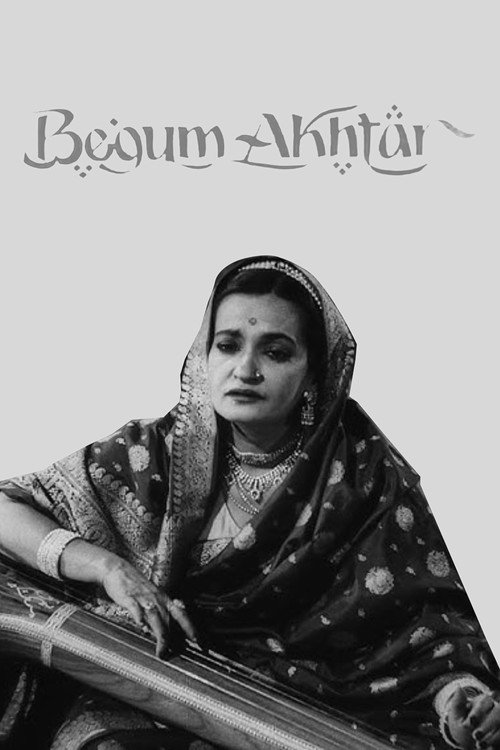
Begum Akhtar 1971
Dive into the intimate world of Begum Akhtar (1971), a 16-minute documentary that paints a vivid portrait of the legendary 'Ghazal and Thumri Queen.' Directed by N.K.
Director: N.K. Issar
Cast
Frequently Asked Questions
What is Begum Akhtar (1971) about?
This documentary offers a close-up view of Begum Akhtar's life, showcasing her both at home and on stage. It highlights her journey as a pioneering artist in ghazals and thumri, blending personal moments with her enduring musical legacy.
Who directed Begum Akhtar?
The film was directed by N.K. Issar, a filmmaker known for capturing intimate and authentic portraits of cultural icons.
Who stars in Begum Akhtar?
The documentary centers on Begum Akhtar herself, with no additional cast listed.
Is Begum Akhtar (1971) worth watching?
As a concise documentary about a legendary artist, Begum Akhtar (1971) is a niche but rewarding watch for fans of Indian classical music or those interested in the lives of cultural icons. Its short runtime makes it accessible, though it's more of a tribute than a deep exploration.
How long is Begum Akhtar?
The film has a runtime of 16 minutes.
About Begum Akhtar (1971) — A Glimpse into the Life of India's 'Ghazal Queen'
Dive into the intimate world of Begum Akhtar (1971), a 16-minute documentary that paints a vivid portrait of the legendary 'Ghazal and Thumri Queen.' Directed by N.K. Issar, this film transcends the stage, capturing Begum Akhtar in her most natural habitat—her home—where she shines both as a revered artist and a woman of elegance and depth. Through quiet, candid moments and evocative performances, the documentary reveals the duality of her life: the domestic warmth of her personal space and the magnetic allure of her stage presence. Atmospheric yet tender, it's a rare glimpse into the soul of a musical icon whose legacy continues to resonate.
N.K. Issar's directorial touch brings out the essence of Begum Akhtar's artistry, blending biography with raw authenticity. The film's minimalist approach underscores the power of her voice and the cultural significance of her contributions to Indian classical music. Whether you're a connoisseur of ghazals or simply drawn to stories of extraordinary women, Begum Akhtar (1971) offers a poignant and memorable experience.