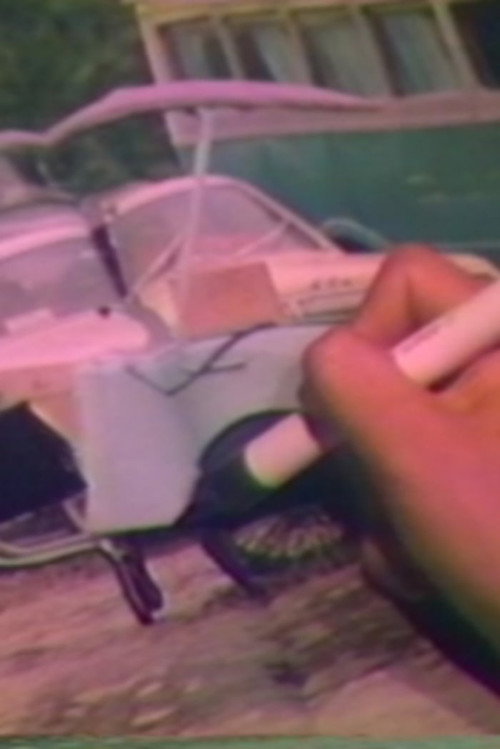
Drawing—Black 1975
Drawing—Black (1975) is a minimalist experimental short film by pioneering Japanese artist Keiji Uematsu, where the screen transforms into a canvas of pure darkness through relentless monochrome abstraction.
Director: Keiji Uematsu
Frequently Asked Questions
What is Drawing—Black (1975) about?
Drawing—Black presents a minimalist exploration of visual erasure, where an image is gradually consumed by blackness over 17 minutes. The film transforms the screen into a void, prompting viewers to question the nature of perception and absence.
Who directed Drawing—Black?
Drawing—Black was directed by Keiji Uematsu, a key figure in Japan's experimental art and cinema scenes known for pushing visual and conceptual boundaries.
Who stars in Drawing—Black?
Cast details for Drawing—Black are not listed, reflecting its status as a non-traditional, concept-driven short film.
Is Drawing—Black (1975) worth watching?
While Drawing—Black isn't a conventional film, its stark minimalism offers a unique experience for fans of experimental cinema. Its 17-minute runtime makes it accessible, though its abstract nature may not appeal to all viewers.
How long is Drawing—Black?
Drawing—Black has a runtime of 17 minutes.
About Drawing—Black (1975) — Keiji Uematsu's hypnotic 17-minute descent into pure abstraction
Drawing—Black (1975) is a minimalist experimental short film by pioneering Japanese artist Keiji Uematsu, where the screen transforms into a canvas of pure darkness through relentless monochrome abstraction. Over its 17-minute runtime, the film immerses viewers in a meditative journey of visual erasure, where each frame pushes closer to an inky void that challenges perception itself. The work isn't just about subtraction—it's a study in absence and presence, using stark blackness to evoke themes of silence, emptiness, and the boundaries of visibility. Uematsu's meticulous control of negative space turns the act of watching into a hypnotic experience, leaving audiences to ponder what lies beyond the darkness.
Part of the avant-garde movement that redefined experimental cinema in the 1970s, Drawing—Black stands as a testament to the power of reduction in art. By stripping away color and narrative, Uematsu transforms a simple concept into a profound meditation on time, memory, and the unseen. Whether you approach it as a visual experiment or a philosophical inquiry, the film's hypnotic pull lingers, making it a cult favorite for fans of unconventional storytelling and artistic expression.