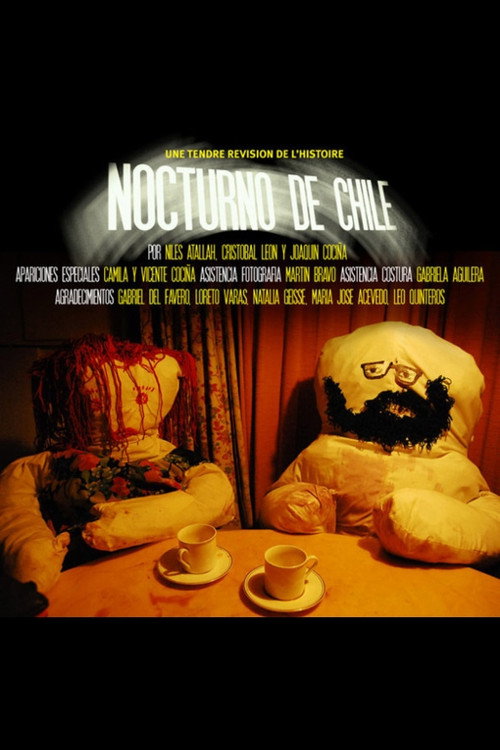
Nocturno de Chile 2007
Dive into the haunting duality of *Nocturno de Chile (2007)*, a bold experimental short film directed by Niles Atallah.
Director: Niles Atallah
Frequently Asked Questions
What is Nocturno de Chile (2007) about?
*Nocturno de Chile* unfolds as two simultaneous films inspired by Roberto Bolaño's novel. One depicts a dinner of writers and intellectuals, while the other reveals torture happening in a neighboring room, creating a jarring juxtaposition of privilege and violence.
Who directed Nocturno de Chile?
The film was directed by Niles Atallah, a filmmaker known for blending experimental techniques with provocative social themes.
Who stars in Nocturno de Chile?
Cast details for *Nocturno de Chile* are not publicly listed.
Is Nocturno de Chile (2007) worth watching?
With its bold concept and surreal animation, *Nocturno de Chile* offers a unique viewing experience for fans of experimental cinema. Though unrated, its thematic depth and artistic ambition make it worth exploring, especially for those interested in Bolaño's work and political allegory.
How long is Nocturno de Chile?
The runtime of *Nocturno de Chile* is 9 minutes.
About Nocturno de Chile (2007) — A Chilling Dual-Narrative Animation Experiment
Dive into the haunting duality of *Nocturno de Chile (2007)*, a bold experimental short film directed by Niles Atallah. This 9-minute animated fantasy reimagines Roberto Bolaño's provocative novel as two parallel narratives unfolding side by side—one capturing the chilling indifference of an intellectual dinner party, the other exposing the brutal reality of torture in an adjacent room. The film's stark contrast between artifice and violence creates an unsettling atmosphere, blending surreal visuals with deep thematic resonance. Shot through with Bolaño's signature critique of power and complicity, *Nocturno de Chile* challenges viewers to confront the contradictions of culture and oppression in a single, disorienting frame.
A meditation on silence and spectatorship, the film's layered storytelling feels like peering into a divided world where morality is suspended between illusion and atrocity. Shot as an experimental animation, it merges fantasy with raw social commentary, making it a standout in avant-garde cinema. The eerie symmetry of the two screens invites reflection on complicity, art, and the price of intellectual detachment.