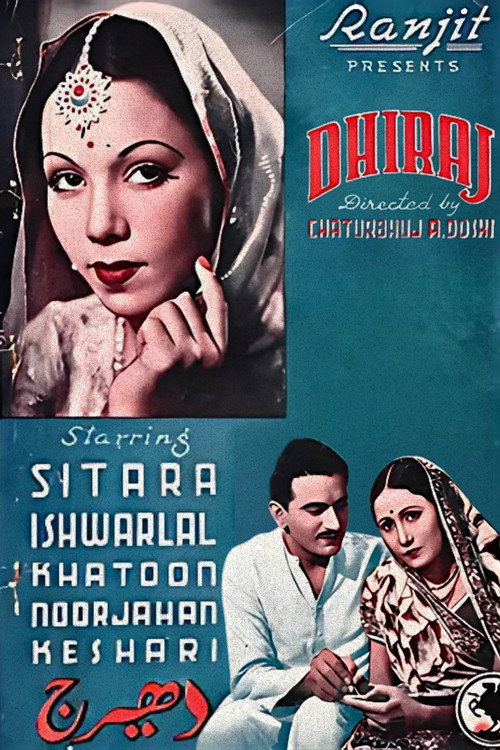
Dhiraj 1942
Dhiraj (1942), a Hindi social drama directed by Chaturbhuj Doshi, unfolds against the backdrop of pre-independence India, weaving a narrative rich with emotional depth and quiet rebellion.
Director: Chaturbhuj Doshi
Cast

Frequently Asked Questions
What is Dhiraj (1942) about?
Dhiraj (1942) is a Hindi social drama set in pre-independence India, following characters who embody the quiet struggles of the era. The film weaves personal stories with subtle nationalist undertones, reflecting the societal tensions of the time.
Who directed Dhiraj?
Dhiraj was directed by Chaturbhuj Doshi, a notable figure in early Indian cinema known for his socially relevant storytelling.
Who stars in Dhiraj?
The film features Sitara Devi, Ishwarlal, and Kesari in lead roles, each delivering performances that add emotional weight to the narrative.
Is Dhiraj (1942) worth watching?
As a historical drama, Dhiraj (1942) offers a unique perspective on India's freedom struggle, though its outdated themes and banned status may limit its appeal. Classic film lovers and history enthusiasts might find it intriguing for its cultural significance.
How long is Dhiraj?
Runtime details are not listed.
About Dhiraj (1942) — Forgotten Hindi Drama with Hidden Nationalist Themes
Dhiraj (1942), a Hindi social drama directed by Chaturbhuj Doshi, unfolds against the backdrop of pre-independence India, weaving a narrative rich with emotional depth and quiet rebellion. The film stars Sitara Devi, Ishwarlal, and Kesari in pivotal roles, bringing to life characters navigating personal and societal struggles under British colonial rule. With its subtle yet powerful undertones, Dhiraj explores themes of resilience, national pride, and the personal cost of resistance. The atmosphere is tense yet poignant, reflecting the era's complexities through everyday struggles and symbolic gestures. Though now a forgotten gem of Indian cinema, its historical significance as a banned film adds layers of intrigue to its legacy.
Produced by Ranjit Movietone, Dhiraj (1942) stands out for its daring subtext, which the British government interpreted as nationalist propaganda, leading to its prohibition. The film's restrained yet evocative storytelling captures the unspoken tensions of the time, making it a compelling watch for history enthusiasts and classic film buffs alike. Its blend of drama and historical resonance offers a glimpse into the socio-political climate of 1940s India.