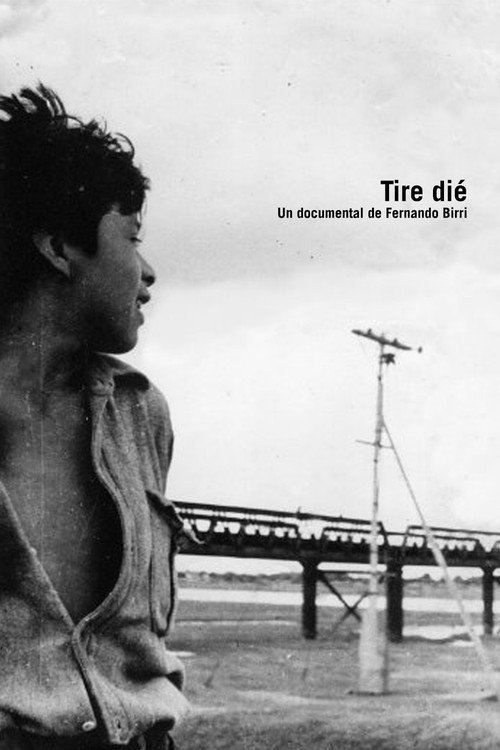
Toss Me a Dime 1958
Directed by pioneering Argentine filmmaker Fernando Birri, *Toss Me a Dime* (1958) offers a raw and poignant glimpse into the daily struggles of children in Santa Fe's working-class "Tire Dié" neighborhood.
Director: Fernando Birri
Cast



Frequently Asked Questions
What is *Toss Me a Dime* (1958) about?
This short documentary follows children from Santa Fe's "Tire Dié" neighborhood who approach train passengers daily, begging for coins with the cry "Tire dié!" (toss me a dime!). It captures their daily lives and the economic hardships their families face, presenting a stark snapshot of mid-century urban poverty through a pioneering cinematic lens.
Who directed *Toss Me a Dime*?
Fernando Birri directed *Toss Me a Dime* (1958), establishing himself as a key figure in Latin American documentary filmmaking with this groundbreaking work.
Who stars in *Toss Me a Dime*?
The film features Guillermo Cervantes Luro, María Rosa Gallo, and Francisco Petrone as key participants in the documentary.
Is *Toss Me a Dime* (1958) worth watching?
While *Toss Me a Dime* isn't rated on IMDb, its historical significance as Latin America's first survey-on-film and its poignant portrayal of social issues make it a compelling watch for fans of documentary cinema and early film history.
How long is *Toss Me a Dime*?
The runtime of *Toss Me a Dime* (1958) is 33 minutes.
About Toss Me a Dime (1958) — A Landmark Latin American Documentary on Poverty and Resilience
Directed by pioneering Argentine filmmaker Fernando Birri, *Toss Me a Dime* (1958) offers a raw and poignant glimpse into the daily struggles of children in Santa Fe's working-class "Tire Dié" neighborhood. These young voices echo through the streets, calling out to train passengers with a plea for spare change—"Tire dié!"—capturing the resilience and hardship of a community teetering on the edge of poverty. This groundbreaking documentary stands as Latin America's first survey-on-film, blending documentary realism with social commentary to expose the stark realities of urban inequality during the mid-20th century.
Birri's lens transforms a simple act of begging into a powerful metaphor for economic disparity, using minimal dialogue and stark visuals to immerse viewers in the lives of these children and their families. The film's stark black-and-white cinematography amplifies the emotional weight of each frame, while its documentary approach invites reflection on the systemic issues that shape such communities. *Toss Me a Dime* remains a vital piece of early Latin American cinema, offering both historical insight and timeless relevance.