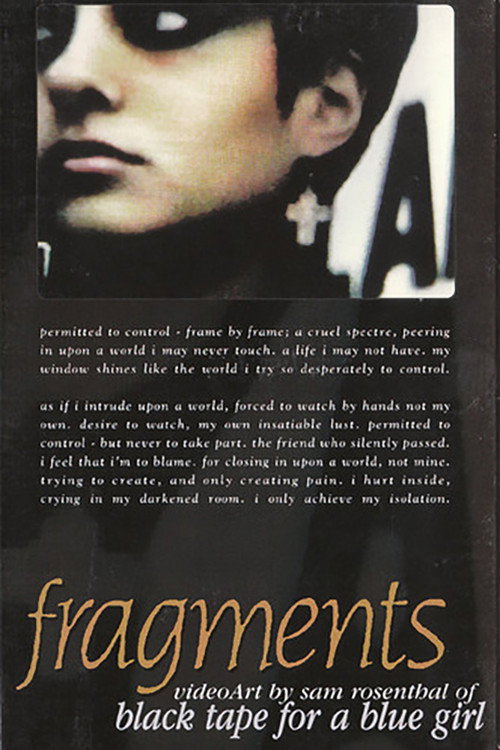
black tape for a blue girl: fragments 1988
"i only achieve my isolation."
Dive into the hauntingly introspective world of *black tape for a blue girl: fragments* (1988), a mesmerizing early work in video art crafted by director Sam Rosenthal between 1985 and 1987.
Director: Sam Rosenthal
Frequently Asked Questions
What is *black tape for a blue girl: fragments* (1988) about?
This experimental short film by Sam Rosenthal delves into themes of isolation and voyeurism, blending poetic narration with striking visuals to explore the artist's struggle to connect with a world just out of reach. It's a deeply introspective work that examines control, desire, and the fragile boundary between observer and participant.
Who directed *black tape for a blue girl: fragments*?
The film was directed by Sam Rosenthal, an artist known for his evocative and atmospheric approach to experimental cinema.
Who stars in *black tape for a blue girl: fragments*?
Cast details for this 1988 experimental film are not publicly listed.
Is *black tape for a blue girl: fragments* (1988) worth watching?
For fans of experimental and avant-garde cinema, *black tape for a blue girl: fragments* offers a compelling glimpse into early video art, though its niche appeal may not resonate with all viewers. Its haunting atmosphere and poetic depth make it a memorable experience for those drawn to introspective storytelling.
How long is *black tape for a blue girl: fragments*?
The runtime of *black tape for a blue girl: fragments* is 60 minutes.
About black tape for a blue girl: fragments (1988) — Exploring Isolation Through Experimental Video Art
Dive into the hauntingly introspective world of *black tape for a blue girl: fragments* (1988), a mesmerizing early work in video art crafted by director Sam Rosenthal between 1985 and 1987. This 60-minute piece unfolds like a fragmented diary, where each frame feels both intimate and distant, capturing the artist's struggle with isolation and the voyeuristic allure of control. The film blurs the line between observer and participant, weaving themes of longing, detachment, and the quiet desperation of watching life unfold from behind a lens. Its atmospheric visuals and poetic narration create a hypnotic experience, evoking a sense of melancholic beauty that lingers long after the credits roll.
*black tape for a blue girl: fragments* stands as a time capsule of experimental filmmaking, where Rosenthal's lens becomes both a shield and a window. The raw, unfiltered emotion in every frame invites viewers to confront their own relationship with desire, power, and the boundaries between self and other. With its stark minimalism and emotional depth, this short film offers a rare glimpse into the mind of an artist grappling with the weight of existence itself.