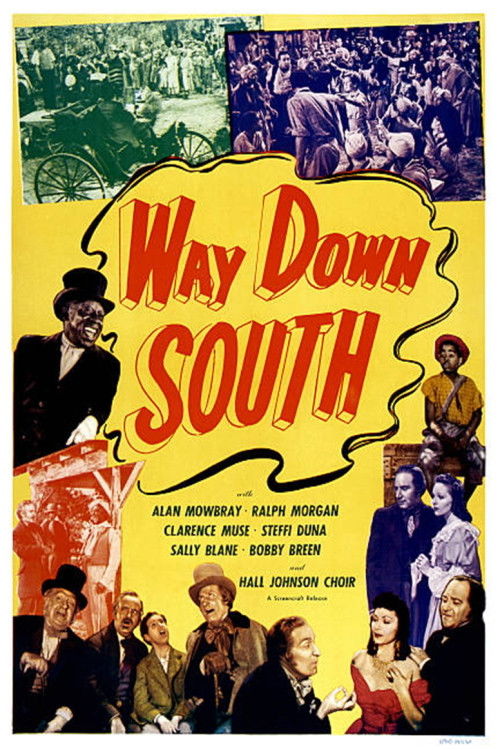
Way Down South 1939
Way Down South (1939), directed by Bernard Vorhaus, blends crime and music into a poignant drama set against the backdrop of the pre-Civil War American South.
Director: Bernard Vorhaus
Cast









Frequently Asked Questions
What is Way Down South (1939) about?
Way Down South (1939) tells the story of a young plantation heir whose father's kind but corrupt executor plans to sell off the estate—including its slaves—immediately after the father's death. The boy fights to protect his family's legacy while uncovering the executor's plan to steal the fortune and flee to France. The drama blends crime, music, and moral conflict against the backdrop of the pre-Civil War South.
Who directed Way Down South?
Way Down South was directed by Bernard Vorhaus, an American filmmaker known for his work in both British and Hollywood cinema during the 1930s and 1940s.
Who stars in Way Down South?
The film stars Bobby Breen as the young heir, alongside Alan Mowbray, Ralph Morgan, Steffi Duna, and Clarence Muse in key roles.
Is Way Down South (1939) worth watching?
Way Down South (1939) is a compelling watch for fans of historical dramas and classic crime films. While it reflects the moral complexities of its time, its themes of injustice and family loyalty remain engaging. The film's short runtime and musical elements add to its appeal, making it a noteworthy entry in pre-war cinema.
How long is Way Down South?
Way Down South (1939) has a runtime of 61 minutes.
About Way Down South (1939) — A gripping drama of family, theft, and redemption in the Old South
Way Down South (1939), directed by Bernard Vorhaus, blends crime and music into a poignant drama set against the backdrop of the pre-Civil War American South. The film follows a young heir whose father's estate—including his slaves—is entrusted to a greedy executor determined to liquidate everything for personal gain. While the narrative unfolds with the innocence of Bobby Breen's lead character, it also exposes the harsh realities of corruption and injustice lurking beneath the surface of plantation life. Vorhaus crafts an atmosphere of moral tension, balancing the idyllic charm of Southern life with the looming shadows of exploitation and betrayal. The story's emotional core lies in its exploration of legacy, ethics, and the bonds that defy the cruelty of the era.
Through its evocative score and heartfelt performances, Way Down South (1939) offers a rare glimpse into a pivotal chapter of history, wrapped in a tale of resilience and defiance. The film's themes resonate with timeless questions about power and morality, making it as relevant today as it was upon its release.