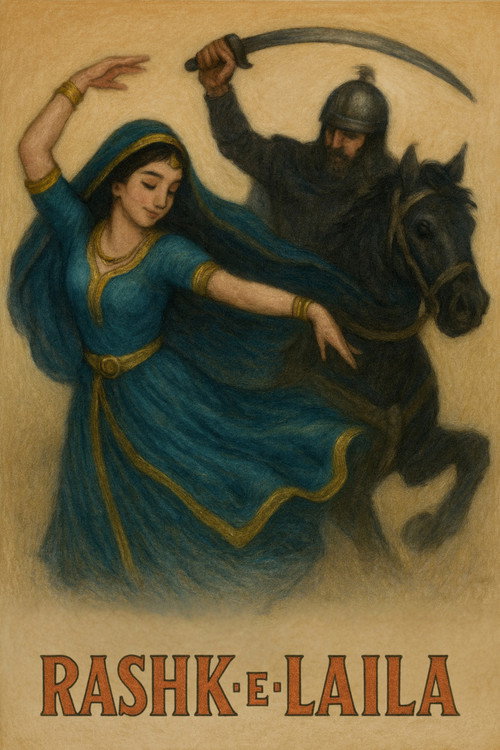
Rashk-e-Laila 1934
Step into the bygone era of early Indian cinema with *Rashk-e-Laila (1934)*, a mesmerizing fantasy romance directed by the visionary Nanubhai Vakil.
Director: Nanubhai Vakil
Cast

Frequently Asked Questions
What is Rashk-e-Laila (1934) about?
This Arabian Nights-inspired fantasy follows Laila, a gypsy dancer who falls for a Persian soldier named Asghar, only to face the wrath of a villainous vizier bent on seizing power. Their passionate yet perilous love story unfolds against a backdrop of courtly intrigue and magical allure.
Who directed Rashk-e-Laila?
The film was directed by Nanubhai Vakil, a pioneering figure in early Indian cinema whose vision brought this mythic romance to life.
Who stars in Rashk-e-Laila?
The film features Zubeida as Laila, Bhai Desa as Asghar, Master Gulab as the villain Sardar Sagi, and Bachhu Pawar in a key supporting role.
Is Rashk-e-Laila (1934) worth watching?
While it's a silent-era gem with a rating of unrated on IMDb, *Rashk-e-Laila* is a fascinating relic of early filmmaking, offering a rare blend of fantasy and drama. History buffs and cinema enthusiasts will appreciate its cultural significance, even if its pacing and effects feel dated by modern standards.
How long is Rashk-e-Laila?
The film runs for 153 minutes, or approximately 2 hours and 33 minutes.
About Rashk-e-Laila (1934) — The Arabian Nights Love Fantasy That Defined Early Indian Cinema
Step into the bygone era of early Indian cinema with *Rashk-e-Laila (1934)*, a mesmerizing fantasy romance directed by the visionary Nanubhai Vakil. Set against the opulent backdrop of Arabian Nights lore, this lavish production unfolds the timeless tale of Laila (Zubeida), a captivating gypsy dancer whose life intertwines with Asghar (Bhai Desa), a dashing Persian soldier. Their blossoming love becomes a battleground as Sardar Sagi (Master Gulab), the sinister vizier's right-hand man, unleashes his dark ambitions—lust, betrayal, and political intrigue—to tear them apart. With lush costumes, dreamlike sequences, and a haunting villainy at its core, this film is a visual and emotional feast.
Draped in the mystique of Persian legends, *Rashk-e-Laila* blends fantasy with raw human drama, capturing the essence of forbidden love and unchecked desire. Zubeida's magnetic presence elevates Laila's character as a symbol of both innocence and defiance, while the film's atmospheric storytelling transports viewers to a world where heartache and heroism collide. Produced by the legendary Mahalakshmi studio—a collaboration between Zubeida and Vakil—the movie remains a landmark of early sound cinema, offering a rare glimpse into the golden age of Indian filmmaking.