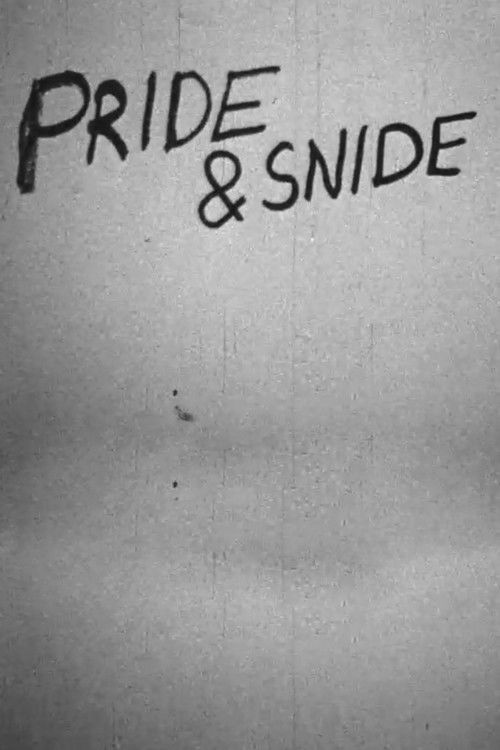
Pride & Snide 1976
Pride & Snide (1976), a concise three-minute documentary directed by Barry Mitchell, captures the vibrant yet divisive spirit of Adelaide's early gay liberation movement.
Director: Barry Mitchell
Frequently Asked Questions
What is Pride & Snide (1976) about?
This short documentary contrasts two distinct approaches to the gay liberation movement in 1970s Adelaide, highlighting both bold activism and subtle resistance. It's a cultural snapshot frozen in a three-minute reel.
Who directed Pride & Snide?
Barry Mitchell directed this documentary, bringing a concise yet powerful perspective to Adelaide's LGBTQ+ history.
Who stars in Pride & Snide?
Cast details for Pride & Snide (1976) are not publicly available, as it's a documentary-style short film focusing on social themes rather than individual performances.
Is Pride & Snide (1976) worth watching?
Despite its short runtime, Pride & Snide offers a fascinating glimpse into early gay rights activism in Australia. Its historical significance outweighs its brief length, making it a compelling watch for film and LGBTQ+ history enthusiasts.
How long is Pride & Snide?
Pride & Snide runs for approximately 3 minutes.
About Pride & Snide (1976) — A 3-Minute Time Capsule of Gay Liberation Struggles
Pride & Snide (1976), a concise three-minute documentary directed by Barry Mitchell, captures the vibrant yet divisive spirit of Adelaide's early gay liberation movement. Through sharp visuals and candid narration, the film contrasts two opposing attitudes toward LGBTQ+ rights—one embracing bold liberation, the other shrouded in hesitation or snide resistance. This brief but impactful short film paints a raw snapshot of 1970s social activism, where progress met pushback in equal measure. Its tight runtime belies its historical weight, offering a unique lens into grassroots queer resistance during a pivotal era.
As a historical document, Pride & Snide (1976) stands out for its unflinching portrayal of ideological clashes within a marginalized community fighting for visibility. Mitchell's direction delivers a punchy, no-frills approach that resonates with authenticity, making it essential viewing for those interested in LGBTQ+ history or social documentaries.