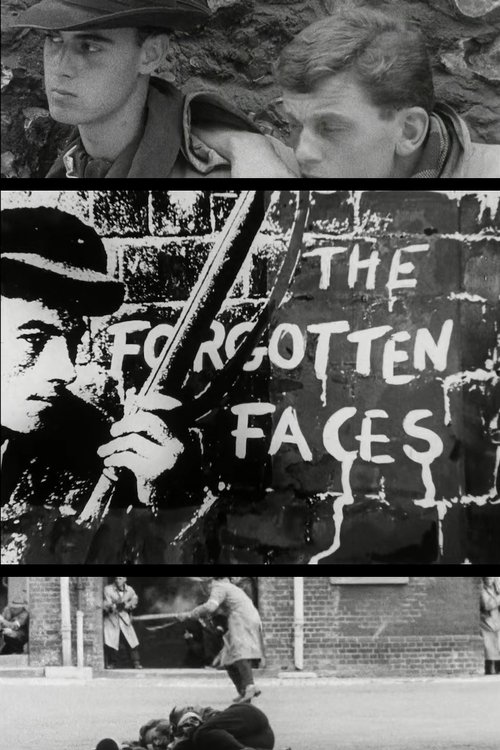
The Forgotten Faces 1961
Peter Watkins' *The Forgotten Faces (1961)* offers a gripping, intimate portrayal of the Hungarian Revolution of 1956, blending raw drama with historical urgency.
Director: Peter Watkins
Cast
Frequently Asked Questions
What is *The Forgotten Faces (1961)* about?
*The Forgotten Faces* reimagines the Hungarian Revolution of 1956 through the eyes of ordinary citizens, blending dramatized scenes with documentary-style realism. The film zeroes in on the personal stories of resistance and survival during a pivotal uprising against Soviet control. Its focus isn't on grand battles, but on the quiet, human moments that defined a nation's fight for freedom.
Who directed *The Forgotten Faces*?
Peter Watkins directed *The Forgotten Faces*.
Who stars in *The Forgotten Faces*?
The film features Frank Hickey, Michael Roy, John Newing, Stan Mercer, and Irene Mallaid in its ensemble cast.
Is *The Forgotten Faces (1961)* worth watching?
While *The Forgotten Faces* is an amateur production, its historical significance and emotional depth make it compelling for fans of docudrama and political cinema. Its 18-minute runtime keeps it concise, but the impact lingers long after. It's not just a footnote in Watkins' career—it's a poignant time capsule of resistance.
How long is *The Forgotten Faces*?
*The Forgotten Faces* runs for 18 minutes.
About The Forgotten Faces (1961) — A raw 1956 Hungarian Revolution drama by Peter Watkins
Peter Watkins' *The Forgotten Faces (1961)* offers a gripping, intimate portrayal of the Hungarian Revolution of 1956, blending raw drama with historical urgency. Shot in a documentary-style reconstruction, the film immerses viewers in the chaos and courage of ordinary people rising against oppression, framed by Watkins' bold directorial choices. As a 1961 amateur production, it earned critical acclaim—particularly in England—where it remains celebrated as a masterpiece of raw, unfiltered storytelling. The 18-minute runtime packs an emotional punch, balancing stark realism with the human cost of revolution.
Fueled by Watkins' passion for social justice, *The Forgotten Faces* avoids romanticism in favor of unflinching authenticity, capturing both the defiance and despair of its era. With a focus on the unknown heroes behind the headlines, the film feels eerily timeless, resonating with themes of resistance and sacrifice. Its amateur roots only amplify its impact, making it a standout in Watkins' early work and a testament to the power of grassroots filmmaking.