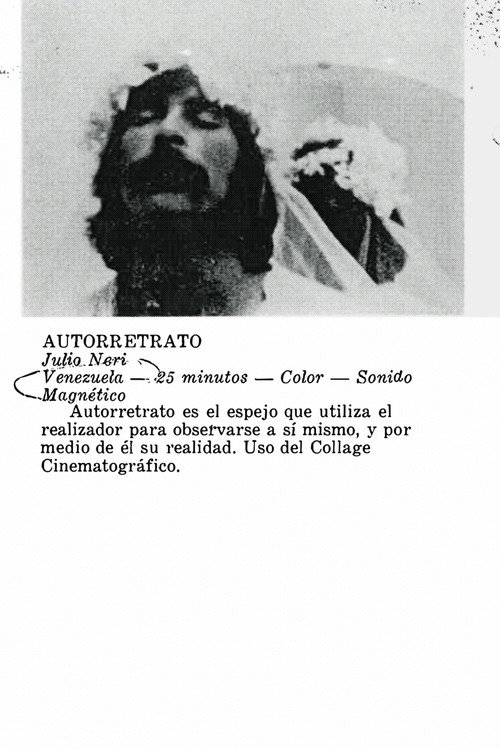
Autorretrato 1976
Dive into *Autorretrato (1976)*, Julio Neri's introspective documentary that serves as a cinematic mirror for both its creator and the world around him.
Director: Julio Neri
Cast
Frequently Asked Questions
What is Autorretrato (1976) about?
*Autorretrato* is a documentary where filmmaker Julio Neri turns the camera on himself, using cinematic collage to dissect his identity and reality. The film is less about narrative and more about evocative imagery and sound, creating a poetic dialogue between the artist and his environment.
Who directed Autorretrato?
*Autorretrato* was directed by Julio Neri, who also stars in the film as the central subject.
Who stars in Autorretrato?
The film stars Julio Neri, who both directs and appears on screen as the focus of this documentary.
Is Autorretrato (1976) worth watching?
While *Autorretrato* is niche, its experimental approach makes it a fascinating watch for fans of avant-garde cinema. At 25 minutes, it's a quick but thought-provoking experience, especially for those interested in introspective filmmaking and artistic self-exploration.
How long is Autorretrato?
*Autorretrato* has a runtime of 25 minutes.
About Autorretrato (1976): A Cinematic Mirror to the Self — Full Movie Info
Dive into *Autorretrato (1976)*, Julio Neri's introspective documentary that serves as a cinematic mirror for both its creator and the world around him. Through a striking collage of images and sounds, Neri crafts a deeply personal exploration of self-reflection, blending reality with artistic expression. The film unfolds like a visual diary, where every frame feels intentional, revealing fragments of a filmmaker's inner landscape and his connection to the broader human experience.
Shot in just 25 minutes, *Autorretrato* is a concentrated burst of creativity, stripping away excess to focus on raw, unfiltered storytelling. The documentary's minimalist aesthetic enhances its emotional weight, making it a standout in experimental cinema. Whether you're drawn to its thematic depth or its innovative approach, this 1976 gem invites viewers to question how we perceive ourselves—and what we leave behind for others to see.