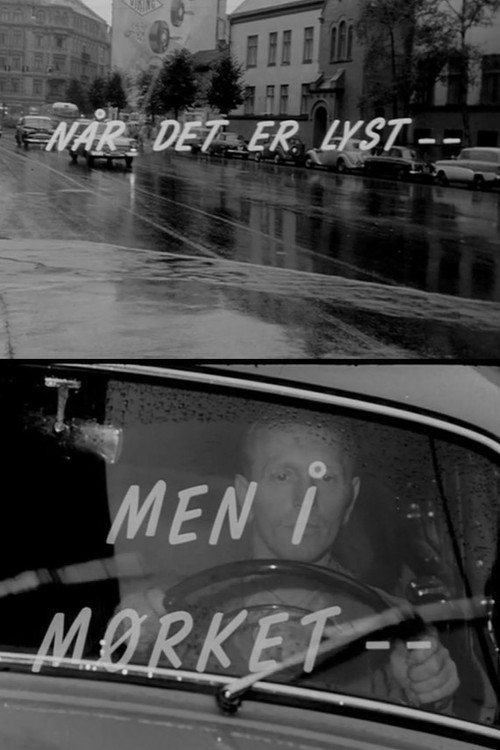
Oslofilm: Når det er lys - men i mørket 1966
This brief yet impactful 1966 documentary from the Oslofilm series shines a light on a simple yet critical safety measure: the use of reflectors. Directed by Erik F.
Director: Erik F. Gustavson
Frequently Asked Questions
What is Oslofilm: Når det er lys - men i mørket (1966) about?
This short documentary highlights the importance of using reflectors to improve visibility and prevent accidents, framed within the everyday streets of Oslo. It's a public service announcement disguised as a stylish visual experiment, using light and contrast to drive its safety message home.
Who directed Oslofilm: Når det er lys - men i mørket?
Erik F. Gustavson directed this film, contributing to the Oslofilm series which spanned four decades of Norwegian public information cinema.
Who stars in Oslofilm: Når det er lys - men i mørket?
Cast details for this documentary are not listed, reflecting the focus on safety messaging over individual performers.
Is Oslofilm: Når det er lys - men i mørket (1966) worth watching?
While short and instructional, its striking visuals and historical significance make it a unique watch for fans of Norwegian cinema or public information films. It's not a blockbuster, but it's a fascinating artifact of its time that transcends its runtime.
How long is Oslofilm: Når det er lys - men i mørket?
The film runs for 3 minutes, making it a quick yet memorable viewing experience.
About Oslofilm: Når det er lys - men i mørket (1966) — A Norwegian safety film that turns reflectors into a cinematic metaphor
This brief yet impactful 1966 documentary from the Oslofilm series shines a light on a simple yet critical safety measure: the use of reflectors. Directed by Erik F. Gustavson, *Oslofilm: Når det er lys - men i mørket* (When It's Light—but in the Dark) explores how small reflective accessories can drastically improve visibility and reduce accidents in urban environments. Part of Norway's long-running public information campaign, the film blends practical advice with a surprisingly cinematic touch, offering a window into mid-20th-century Norwegian life and urban planning. The three-minute runtime is packed with clarity, using stark contrasts between light and shadow to underscore its message about safety without words.
Set against the backdrop of postwar Oslo, the documentary reflects the era's emphasis on collective responsibility and civic duty. While its primary goal is educational, the film's stark visual style and concise storytelling elevate it beyond mere informational content. It's a fascinating slice of Norwegian social history, capturing the intersection of design, urban life, and public welfare in a way that feels both timeless and distinctly of its time.