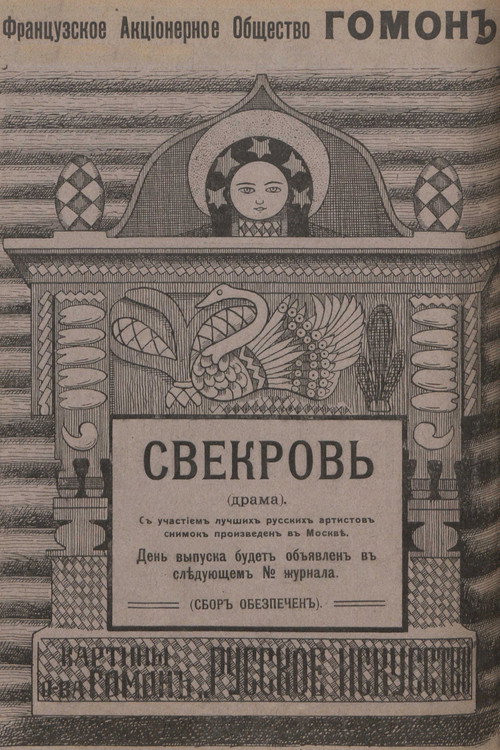
Mother-in-Law 1912
Step back to 1912 with *Mother-in-Law*, an early Russian silent short directed by Vladimir Krivtsov that turns domestic friction into cinematic gold. Set in the drawing rooms and summer dachas of pre-revolutionary St.
Director: Vladimir Krivtsov
Frequently Asked Questions
What is Mother-in-Law (1912) about?
This early silent short follows the comedic chaos that erupts when a new bride's mother arrives, turning household harmony into a delicate dance of politeness and exasperation. Through witty visual gags and sharp social observation, the film explores generational clashes and the fragile balance of domestic life in pre-revolutionary Russia.
Who directed Mother-in-Law?
Vladimir Krivtsov helmed this early Russian silent film, bringing a light touch to the new medium.
Who stars in Mother-in-Law?
Cast details for *Mother-in-Law (1912)* are not fully recorded, reflecting the limited documentation of many early silent shorts from this era.
Is Mother-in-Law (1912) worth watching?
While it clocks in at just over a reel, *Mother-in-Law* is a fascinating artifact for silent-film devotees and history buffs, offering a glimpse into early Russian cinema's playful take on family dynamics. Its historical value and gentle humor make it a charming curio rather than a modern must-see.
How long is Mother-in-Law?
Runtime details are not listed for *Mother-in-Law (1912)*, but early silent shorts typically ran between 10 and 15 minutes.
About Mother-in-Law (1912) — A Silent-Era Comedy Classic from Early Russian Cinema
Step back to 1912 with *Mother-in-Law*, an early Russian silent short directed by Vladimir Krivtsov that turns domestic friction into cinematic gold. Set in the drawing rooms and summer dachas of pre-revolutionary St. Petersburg, the film peels back the gilded veneer of polite society to reveal the powder-keg of a mother-in-law's arrival. Wry glances, stifled sighs, and the occasional dropped teacup become the visual language of a comedy where hierarchy is turned upside-down and one young bride's patience is stretched thinner than the latest Parisian ribbon. The black-and-white frames hum with the tension of etiquette clashing against raw emotion, creating an atmosphere that's equal parts drawing-room farce and quiet social satire.
Seen through a century-old lens, *Mother-in-Law (1912)* feels surprisingly modern, its themes of generational friction and newlywed nerves resonating with anyone who's ever survived a family holiday. Krivtsov's deft framing and comic timing transform a simple scenario into a snapshot of a society on the cusp of enormous change, proving that laughter is as timeless as the tensions it pokes fun at. Whether you're a silent-era enthusiast or a newcomer curious about the roots of cinematic humor, this one-reel gem offers a charming peek behind the lace curtains of history.