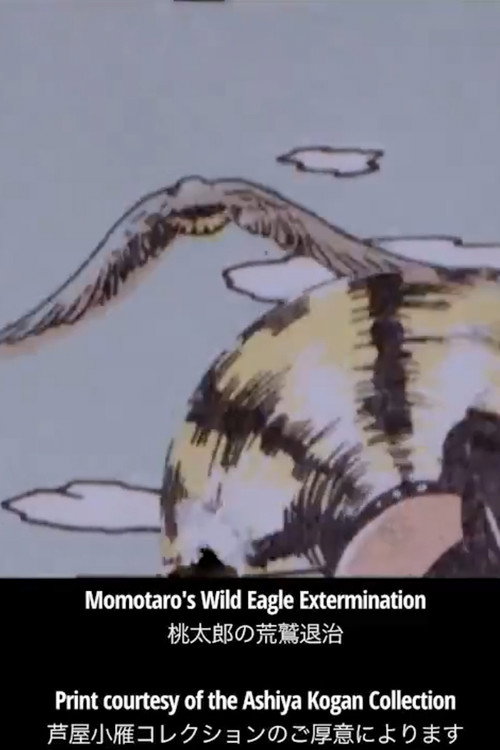
Momotaro Wild Eagle Conquest 1935
Dive into one of Japan's earliest animated political allegories with *Momotaro Wild Eagle Conquest (1935)*, a three-minute wartime propaganda short that repurposed the beloved Edo-era folk hero Momotaro to serve nationalist causes.
Frequently Asked Questions
What is Momotaro Wild Eagle Conquest (1935) about?
This three-minute animated short follows the legendary Japanese hero Momotaro as he leads a squad of penguin soldiers to confront an eagle that has stolen their eggs. Set against the backdrop of 1930s wartime Japan, the film blends folkloric charm with propagandist messaging, framing the conflict as a battle for national honor and unity.
Who directed Momotaro Wild Eagle Conquest?
Director information is not available.
Who stars in Momotaro Wild Eagle Conquest?
The film centers on Momotaro, the iconic peach-born folk hero, alongside an ensemble of penguin soldiers and the villainous eagle. While no individual cast names are credited, the animation's focus on Momotaro as the protagonist drives the narrative forward.
Is Momotaro Wild Eagle Conquest (1935) worth watching?
As a historical artifact, *Momotaro Wild Eagle Conquest* offers fascinating insight into early animated propaganda and Japan's wartime cultural output. Its brevity and allegorical themes make it a niche watch, but its significance in animation history and wartime media cannot be overstated.
How long is Momotaro Wild Eagle Conquest?
The film runs for approximately 3 minutes.
About Momotaro Wild Eagle Conquest (1935) — Japan's Earliest Animated Propaganda Short Revisited
Dive into one of Japan's earliest animated political allegories with *Momotaro Wild Eagle Conquest (1935)*, a three-minute wartime propaganda short that repurposed the beloved Edo-era folk hero Momotaro to serve nationalist causes. This whimsical yet heavy-handed cartoon follows the legendary peach-born warrior as he leads a band of penguin soldiers on a mission to reclaim their stolen eggs from a menacing eagle. Beneath its charming surface, the film reflects the militaristic fervor of 1930s Japan, blending folkloric nostalgia with propagandist urgency. The animation's simplicity belies its historical significance, offering a rare glimpse into how animation was weaponized during wartime to shape public sentiment and identity.
While the director remains uncredited, the film's swift pacing and symbolic storytelling underscore its role as an early experiment in cinematic propaganda. Though modest in length, *Momotaro Wild Eagle Conquest* stands as a fascinating footnote in animation history, bridging traditional Japanese folklore with the exigencies of modern wartime storytelling. Its brevity masks a deliberate agenda, making it a curiosity for both animation historians and students of 20th-century media manipulation.