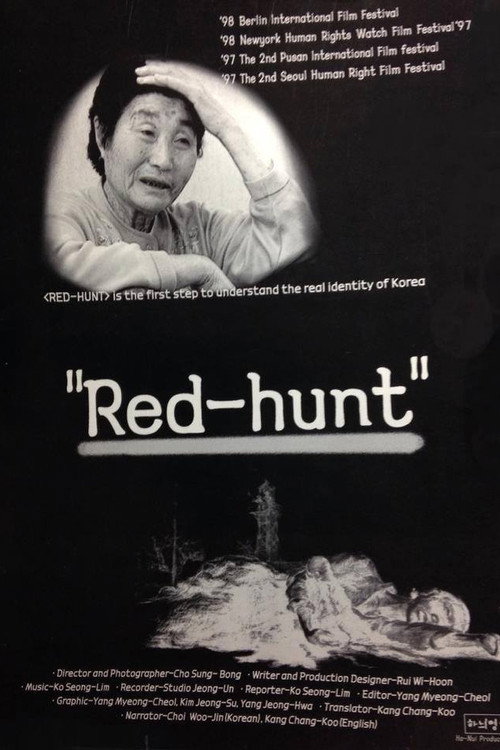
Red-Hunt 1997
"RED-HUNT is the first step to understand the real identity of Korea"
Directed by Cho Sung-bong, *Red-Hunt (1997)* is a haunting documentary that plunges viewers into one of Korea's most tragic chapters.
Director: Cho Sung-bong
Frequently Asked Questions
What is Red-Hunt (1997) about?
*Red-Hunt* is a documentary that revisits the 'Red Hunt' massacre in 1950s Jeju Island, where thousands were killed over six years in a brutal ideological purge. Survivors share their harrowing memories, revealing how politics erased lives in caves, waterfalls, and fields across the island.
Who directed Red-Hunt?
The film was directed by Cho Sung-bong, a filmmaker known for tackling sensitive historical subjects with unflinching clarity.
Who stars in Red-Hunt?
While the cast isn't officially listed, *Red-Hunt* centers on the survivors of the Jeju massacre, whose testimonies drive the documentary's emotional core.
Is Red-Hunt (1997) worth watching?
As a documentary, *Red-Hunt* stands out for its raw honesty and historical significance. Though unrated, its themes of justice and memory make it a compelling watch for fans of socially conscious cinema. Its brevity and intensity leave a lasting impact.
How long is Red-Hunt?
The film runs for 83 minutes.
Red-Hunt (1997): A Chilling Documentary on Jeju's Forgotten Massacre — Full Movie Info
Directed by Cho Sung-bong, *Red-Hunt (1997)* is a haunting documentary that plunges viewers into one of Korea's most tragic chapters. Set against the backdrop of Jeju Island's turbulent 1950s, the film follows survivors as they recount the horrors of the 'Red Hunt' massacre—a six-year reign of ideological violence in caves, waterfalls, and fields where life and death blurred into political strategy. Through their testimonies, the documentary strips away decades of silence to expose the raw, unfiltered truth of a massacre that shaped Korea's identity.
With a runtime of just 83 minutes, *Red-Hunt* is a visceral, unflinching exploration of trauma and memory. Cho Sung-bong crafts a narrative that lingers like an open wound, blending historical gravity with intimate storytelling. The film doesn't just document history—it forces audiences to confront it, making it essential viewing for those seeking to understand Korea's complex past through the lens of personal sacrifice.