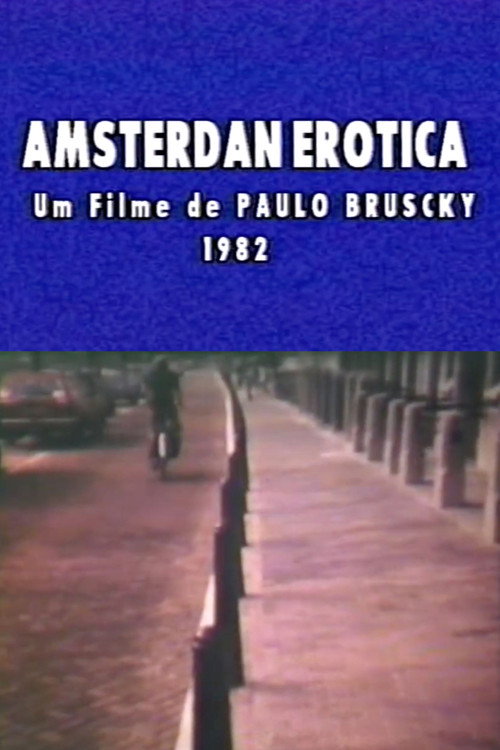
Amsterdam Erótica 1982
Paulo Bruscky's curious experimental short *Amsterdam Erótica (1982)* sends viewers on a playful yet enigmatic visual journey through the Dutch capital.
Director: Paulo Bruscky
Frequently Asked Questions
What is Amsterdam Erótica (1982) about?
This experimental short by Paulo Bruscky documents his search for phallic symbols in the streets of Amsterdam. The film blends humor and observation, turning everyday urban elements into unexpected visual metaphors.
Who directed Amsterdam Erótica?
Paulo Bruscky, the Brazilian filmmaker known for his avant-garde and conceptual art practices, directed *Amsterdam Erótica*.
Who stars in Amsterdam Erótica?
Director Paulo Bruscky appears as the primary subject of the film, with no credited cast members listed.
Is Amsterdam Erótica (1982) worth watching?
While it's a niche experimental film, *Amsterdam Erótica* offers a unique slice of 1980s avant-garde cinema. Its playful premise and unfiltered style may appeal to fans of offbeat, symbolic storytelling, though it's unlikely to satisfy mainstream expectations.
How long is Amsterdam Erótica?
Runtime details are not listed for this film.
About Amsterdam Erótica (1982) — Paulo Bruscky's quirky exploration of urban phallic symbolism
Paulo Bruscky's curious experimental short *Amsterdam Erótica (1982)* sends viewers on a playful yet enigmatic visual journey through the Dutch capital. The film follows the director himself as he explores the city's streets, parks, and hidden corners in search of unexpected phallic symbols woven into everyday urban life. Shot in a raw, vérité style, Bruscky's work blends whimsical observation with subtle social commentary, transforming mundane objects into provocative icons. The atmosphere is lighthearted yet thought-provoking, inviting audiences to reconsider the boundaries between art and the subconscious.
With its distinctive premise and low-fi aesthetic, *Amsterdam Erótica* stands out as a quirky time capsule of 1980s avant-garde cinema. Though grounded in the director's personal quest, the film transcends its niche to pose questions about symbolism, perception, and the role of the artist. The black-and-white visuals add a timeless quality, while the absence of dialogue keeps the focus squarely on Bruscky's unconventional visual storytelling.