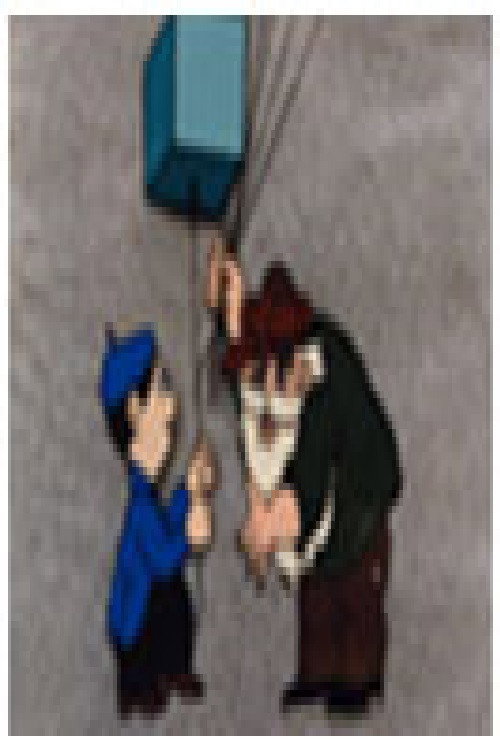
Facade 1996
After a decade away from filmmaking, Darko Markovikj returned with *Facade (1996)*, a striking animated short that critiques the dangers of political conformity.
Director: Darko Markovikj
Frequently Asked Questions
What is Facade (1996) about?
*Facade* dives into the absurdity of political dogma, portraying unification as a form of defeat that erases individuality. The film uses stark animation to critique systems that demand absolute submission, framing resistance as the lifeblood of creativity and progress.
Who directed Facade?
Facade was directed by Darko Markovikj, a filmmaker known for his provocative visual storytelling.
Who stars in Facade?
Cast details for Facade (1996) are not publicly available.
Is Facade (1996) worth watching?
As a 10-minute animated short, *Facade* is best for viewers who appreciate politically charged art with a minimalist aesthetic. While it lacks a traditional narrative, its bold theme and striking visuals make it a compelling watch for fans of experimental cinema.
How long is Facade?
*Facade* runs for 10 minutes.
About Facade (1996) — A Bold Animated Short on Political Conformity
After a decade away from filmmaking, Darko Markovikj returned with *Facade (1996)*, a striking animated short that critiques the dangers of political conformity. At just 10 minutes long, the film explores how rigid ideological uniformity stifles individuality and creativity, framing diversity as essential to human progress. Blending sharp satire with abstract visuals, Markovikj crafts a thought-provoking allegory that challenges audiences to question systems that demand blind allegiance. Set against an atmosphere of tension and irony, the short's minimalist style amplifies its bold message: true beauty lies in dissent, not uniformity.
Markovikj's work stands out in the animation genre for its fearless engagement with political themes, offering a concise yet powerful commentary on society's resistance to change. While brief, *Facade* packs a punch, leaving viewers to ponder the cost of surrendering personal agency to oppressive ideologies.