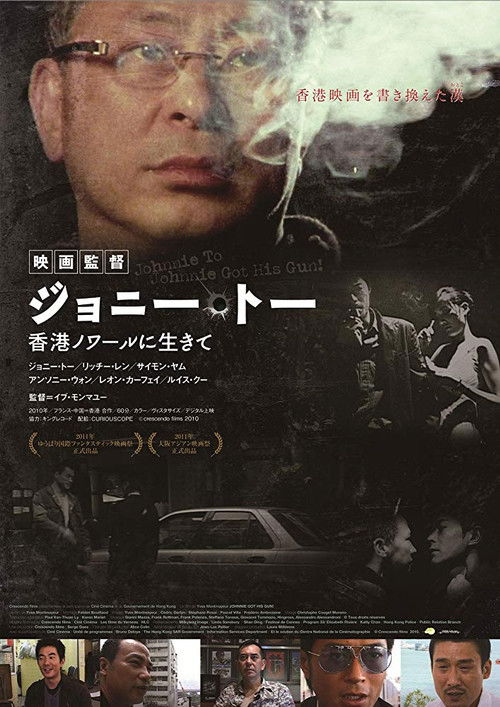
Johnnie Got His Gun! 2010
Dive into *Johnnie Got His Gun! (2010)*, a compelling documentary that peels back the layers of Hong Kong cinema's golden era through the lens of legendary filmmaker Johnnie To.
Director: Yves Montmayeur
Cast

Frequently Asked Questions
What is Johnnie Got His Gun! (2010) about?
*Johnnie Got His Gun! (2010)* is a documentary portrait of acclaimed Hong Kong director Johnnie To, stitched together from scattered interview clips and iconic film scenes. It explores his creative journey, influences, and the evolution of his signature style through archival footage and candid reflections.
Who directed Johnnie Got His Gun!?
Yves Montmayeur directed *Johnnie Got His Gun! (2010)*, blending interview fragments and cinematic clips to create this homage to To's work.
Who stars in Johnnie Got His Gun!?
The documentary features Johnnie To and Louis Koo among the prominent voices, alongside key collaborators from To's films like *The Mission* and *Breaking News*.
Is Johnnie Got His Gun! (2010) worth watching?
With its 59-minute runtime and focus on a titan of Hong Kong cinema, *Johnnie Got His Gun! (2010)* is a must-watch for fans of To's films or documentary enthusiasts seeking behind-the-scenes insights. The fragmented style may not suit everyone, but the content delivers a unique tribute to a master filmmaker.
How long is Johnnie Got His Gun!?
*Johnnie Got His Gun! (2010)* has a runtime of 59 minutes.
About Johnnie Got His Gun! (2010) — Unfiltered Look at Johnnie To's Iconic Career Through Clips & Interviews
Dive into *Johnnie Got His Gun! (2010)*, a compelling documentary that peels back the layers of Hong Kong cinema's golden era through the lens of legendary filmmaker Johnnie To. Directed by Yves Montmayeur, this 59-minute film stitches together fragmented interview clips from To and key collaborators across different eras, weaving a narrative that feels both intimate and scattered. Clips from iconic To films like *Breaking News*, *P.T.U*, and *The Mission* serve as vivid backdrop, while the documentary balances between reverence and realism—capturing the visionary's creative process without sugarcoating the montage-style assembly.
The atmosphere is electric, charged with the raw energy of Hong Kong's action cinema and the introspective musings of a man who shaped the industry. Montmayeur's approach may feel choppy in places, but the film thrives on spontaneity, offering glimpses into To's genius through unfiltered snippets. It's a tribute for fans, a curiosity for cinephiles, and a snapshot of a cinematic legacy that refuses to be boxed in.