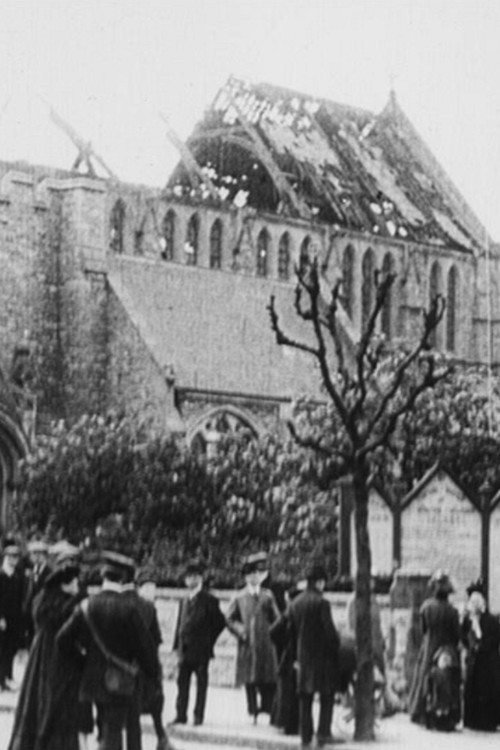
London Church Completely Destroyed By Fire 1913
A striking silent-era newsreel captures the dramatic aftermath of a 1913 arson attack on a London church, leaving £20,000 in damage in its wake.
Frequently Asked Questions
What is London Church Completely Destroyed By Fire (1913) about?
This short silent film documents the aftermath of a church fire in New Cross, London, suspected to be the work of suffragette activists. The footage reveals the extent of the damage, including a gutted interior and collapsed roof, providing a grim snapshot of early 20th-century urban unrest.
Who directed London Church Completely Destroyed By Fire?
Director information is not available.
Who stars in London Church Completely Destroyed By Fire?
No credited cast members are listed for this historical newsreel.
Is London Church Completely Destroyed By Fire (1913) worth watching?
While extremely brief, this silent-era clip offers a unique historical perspective on early 20th-century social conflicts. Its raw footage provides a chilling look at the intersection of activism and destruction, making it a niche but intriguing watch for silent film or documentary enthusiasts.
How long is London Church Completely Destroyed By Fire?
The film runs for approximately 1 minute.
London Church Completely Destroyed By Fire (1913): A Haunting Arson Archive — Full Info
A striking silent-era newsreel captures the dramatic aftermath of a 1913 arson attack on a London church, leaving £20,000 in damage in its wake. The brief but vivid footage showcases the charred remains of the building at New Cross, with smoldering debris, a collapsed roof, and firefighters sifting through the wreckage. The incident is steeped in the era's social unrest, as authorities suspected suffragette militants of targeting the church in protest. The eerie silence of the one-minute film contrasts sharply with the intensity of the destruction, offering a stark glimpse into Edwardian-era societal tensions and urban upheaval.
This rare historical artifact stands as a testament to a turbulent time in London's history, when activism and architecture clashed violently. The film's grainy aesthetic and unflinching portrayal of devastation evoke a sense of urgency and unrest, making it a haunting document of early 20th-century strife. Though brief, it serves as a powerful reminder of how ideological battles once left physical scars on the city's landscape.