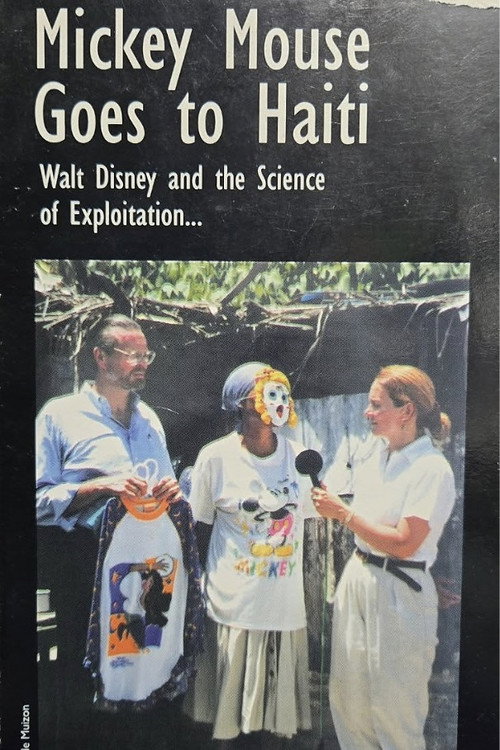
Mickey Mouse Goes to Haiti 1996
Mickey Mouse Goes to Haiti (1996) pulls back the curtain on the dark side of Disney's global supply chain, exposing the exploitative labor practices in the poorest nation in the Western Hemisphere.
Frequently Asked Questions
What is Mickey Mouse Goes to Haiti (1996) about?
This documentary exposes how Disney's garments and products are manufactured in Haiti under grueling labor conditions. Workers face intimidation and firing if they attempt to unionize, while living wages remain a distant reality despite the corporation's ability to easily afford them.
Who directed Mickey Mouse Goes to Haiti?
Director information is not available.
Who stars in Mickey Mouse Goes to Haiti?
The film features interviews with Haitian garment workers and labor activists, along with unseen footage from factory floors where Disney products are made.
Is Mickey Mouse Goes to Haiti (1996) worth watching?
As a 18-minute documentary, it's a powerful and concise critique of corporate ethics, making it a compelling watch for those interested in labor rights and globalization. While lacking a rating, its themes resonate strongly with documentary fans seeking socially conscious content.
How long is Mickey Mouse Goes to Haiti?
Mickey Mouse Goes to Haiti has a runtime of 18 minutes.
About Mickey Mouse Goes to Haiti (1996) — A Shocking Look at Disney's Supply Chain Exploitation
Mickey Mouse Goes to Haiti (1996) pulls back the curtain on the dark side of Disney's global supply chain, exposing the exploitative labor practices in the poorest nation in the Western Hemisphere. This 18-minute documentary shines a light on garment workers trapped in harsh conditions, where speaking up for fair wages can mean immediate dismissal. Despite Disney's ability to improve lives with a mere 58-cent hourly wage increase, these workers struggle to survive on wages that fall far short of living standards. The film blends stark realism with social critique, revealing the gap between corporate profits and human dignity.
The atmosphere is one of sobering urgency, blending quiet activism with the unmistakable irony of Mickey Mouse—a symbol of joy and childhood—becoming intertwined with human suffering. It's a short but impactful look at corporate accountability, globalization, and the ethical cost of cheap production. Audiences emerge with a clearer sense of how everyday products and beloved icons can mask stark realities.