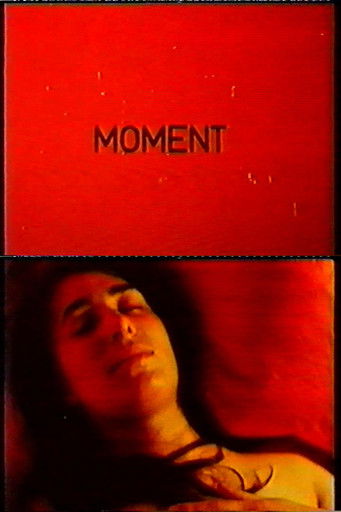
Moment 1968
A quiet revolution in cinema unfolds in Stephen Dwoskin's 1968 experimental short *Moment*, where a static camera captures the unflinching close-up of actress Tina Fraser in a single, unbroken shot.
Director: Stephen Dwoskin
Cast
Frequently Asked Questions
What is Moment (1968) about?
*Moment* captures a woman's face in a single, unbroken shot before, during, and after orgasm, using the camera's fixed gaze to explore themes of vulnerability, perception, and the limits of the film frame. It's less about the act itself and more about how we witness—and are witnessed by—art.
Who directed Moment?
The film was directed by Stephen Dwoskin, an experimental filmmaker known for pushing cinematic boundaries and challenging conventional narratives through bold, often provocative visual experiments.
Who stars in Moment?
The short stars Tina Fraser, whose evocative presence anchors the film's emotional and thematic core.
Is Moment (1968) worth watching?
As an unrated experimental documentary, *Moment* isn't for everyone, but its bold approach to form and intimacy makes it a fascinating watch for fans of avant-garde cinema. Its 13-minute runtime and stark aesthetic demand patience, yet reward viewers with a uniquely powerful experience.
How long is Moment?
The film runs for 13 minutes.
About Moment (1968) — A Pioneering 13-Minute Film on Intimacy and the Camera's Gaze
A quiet revolution in cinema unfolds in Stephen Dwoskin's 1968 experimental short *Moment*, where a static camera captures the unflinching close-up of actress Tina Fraser in a single, unbroken shot. This radical documentary strips intimacy down to its essentials, framing desire as both an act of courage and a study of perception. The film's deliberate stillness transforms a fleeting personal experience into a meditation on observation itself—how the frame defines our understanding, and how distance shapes our connection to what we witness. Dwoskin's work refuses to indulge or exploit; instead, it invites viewers into a space between art and life, where the boundaries of cinema and human experience blur. The result is a mesmerizing, almost meditative encounter that lingers long after the screen fades to black.
Shot in stark black-and-white, *Moment* (1968) transforms a private, visceral moment into a public discourse on art's role in challenging societal norms. Fraser's performance is raw yet controlled, her expressions unfolding like a silent poem of vulnerability and release. The film's power lies not in spectacle but in its restraint, using the camera's gaze to interrogate the very act of looking. For those seeking films that push the limits of form while honoring emotional depth, Dwoskin's short is a landmark experiment—one that dares to ask what it means to truly see another person.