
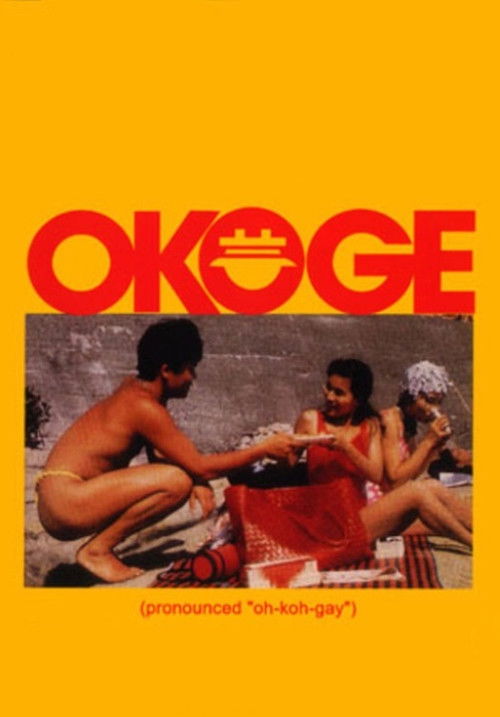
Okoge 1992
"Pronounded "Oh-Ko-Gay""
Okoge (1992) is a Tokyo-set comedy-drama that weaves a gentle yet poignant story around friendship and unexpected alliances.
Director: Takehiro Nakajima
Cast

Misa Shimizu
Sayoko Morohashi

Takehiro Murata
Goh Yoshino

Takeo Nakahara
Tochihiko Terasaki

Atsushi Fukazawa
Tamio Sawaragi

Masayuki Shionoya
Genji Kurihara
Takatoshi Takeda
Gay bar bartender
Michio Kida
Koma-san

Noriko Sengoku
Kinoe Yoshino

Kyōzō Nagatsuka
Toichi Yoshino

Mitsuko Oka
Tokuko, Toichi's wife
Frequently Asked Questions
What is Okoge (1992) about?
Okoge follows a straight young woman in Tokyo who becomes entangled in the lives of a gay man and his married lover. The film explores themes of friendship, loyalty, and self-acceptance as their relationships evolve in surprising ways.
Who directed Okoge?
Okoge was directed by Takehiro Nakajima, who crafts a story that balances humor and emotional depth, creating an intimate portrait of human connections.
Who stars in Okoge?
The film stars Misa Shimizu, Takehiro Murata, and Takeo Nakahara, with standout performances from Atsushi Fukazawa and Masayuki Shionoya.
Is Okoge (1992) worth watching?
Okoge is a well-crafted comedy-drama that offers a rare glimpse into 1990s Tokyo's social dynamics. Its blend of humor and heartfelt moments makes it a compelling watch for fans of character-driven stories.
How long is Okoge?
Okoge has a runtime of 120 minutes.
About Okoge (1992) — A Heartfelt Comedy-Drama of Love and Unexpected Bonds
Okoge (1992) is a Tokyo-set comedy-drama that weaves a gentle yet poignant story around friendship and unexpected alliances. The film centers on a straight-living woman whose life intertwines with a gay man and his married lover, exploring the complexities of love, loyalty, and connection in 1990s Japan. Directed by Takehiro Nakajima, the movie blends humor and heartache, painting a vivid portrait of urban loneliness and the bonds that form despite societal norms. With its intimate storytelling and nuanced performances, Okoge offers a rare glimpse into the emotional landscapes of its characters, all set against the backdrop of a bustling metropolis.
At its core, Okoge is a film about acceptance—both of oneself and others—delivered with warmth and sincerity. The narrative unfolds with a natural rhythm, balancing lighthearted moments with deeper reflections on relationships. Nakajima's direction ensures that the comedy never undermines the drama, creating a tone that feels both authentic and engaging. The result is a touching exploration of human connection that lingers long after the final scene.