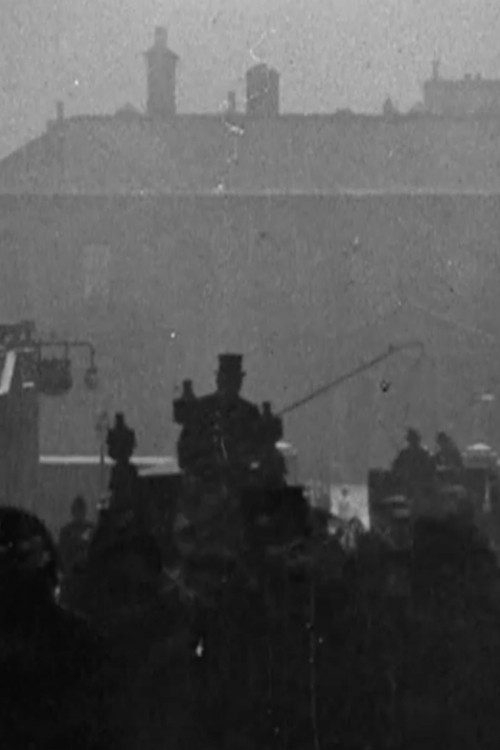
Funeral Procession in Edinburgh 1901
Captured in fleeting black-and-white, this 1901 documentary short *Funeral Procession in Edinburgh* offers a stark glimpse into Victorian mourning traditions.
Frequently Asked Questions
What is Funeral Procession in Edinburgh (1901) about?
This early documentary short documents a mournful procession through Edinburgh's wintry streets, capturing a moment of Victorian-era mourning customs in motion. The film's brevity and lack of embellishment make it a raw slice of historical life.
Who directed Funeral Procession in Edinburgh?
Director information is not available.
Who stars in Funeral Procession in Edinburgh?
The film features an uncredited ensemble of mourners and pallbearers, their identities lost to time but their presence preserved in cinema's earliest days.
Is Funeral Procession in Edinburgh (1901) worth watching?
Though unrated and brief, its historical significance as one of the first films to document a public procession in Scotland makes it a compelling watch for film historians and silent cinema enthusiasts. The eerie, atmospheric quality elevates it beyond a mere curiosity.
How long is Funeral Procession in Edinburgh?
The runtime is approximately 2 minutes.
About Funeral Procession in Edinburgh (1901) — The Silent Short That Captured a Victorian Era Funeral
Captured in fleeting black-and-white, this 1901 documentary short *Funeral Procession in Edinburgh* offers a stark glimpse into Victorian mourning traditions. Shot against a bitter winter backdrop, the film follows a solemn cortege winding through Edinburgh's historic streets, its somber rhythm underscoring the era's cultural attitudes toward death. As one of the earliest surviving cinematic records of a public procession in Scotland, it blends historical curiosity with an eerie, almost ghostly atmosphere—where horse-drawn hearses and bowler-hatted mourners feel both distant and eerily immediate. The genre's minimalism amplifies the mood: no dialogue, no embellishment, just the quiet weight of tradition preserved on celluloid.
While director and cast remain unidentified, the film's power lies in its authenticity. Its brevity—just two minutes of screen time—sharpens its impact, transforming a fleeting moment from the past into a haunting artifact of early cinema. For historians, film buffs, or anyone fascinated by the evolution of visual storytelling, it's a captivating time capsule that invites reflection on how grief and ceremony are framed across centuries.