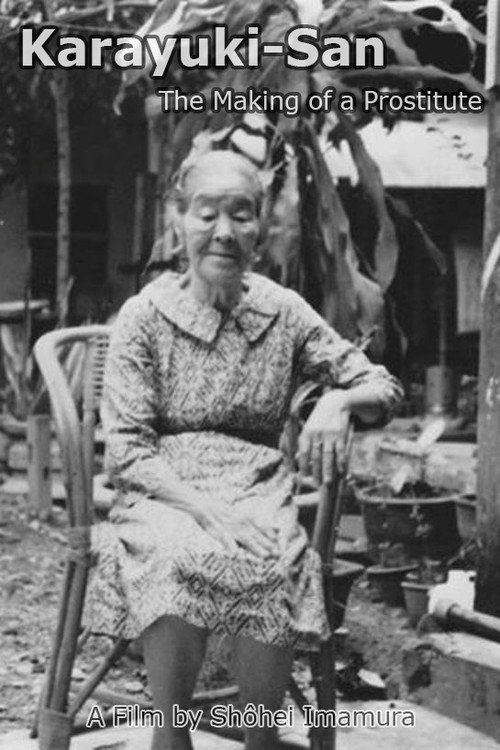
Karayuki-San, the Making of a Prostitute 1973
Dive into Shōhei Imamura's *Karayuki-San, the Making of a Prostitute (1973)*, a haunting documentary that shines a light on one of Japan's most painful historical realities.
Director: Shōhei Imamura
Cast

Frequently Asked Questions
What is *Karayuki-San, the Making of a Prostitute* (1973) about?
This documentary by Shōhei Imamura explores the dark history of *karayuki-san*—Japanese women trafficked into prostitution during the post-war period. Through the story of one woman sent to Malaysia, the film examines poverty, deception, and the human cost of survival.
Who directed *Karayuki-San, the Making of a Prostitute*?
The film was directed by Shōhei Imamura, a renowned Japanese filmmaker celebrated for his raw, documentary-style storytelling that often delves into social and historical taboos.
Who stars in *Karayuki-San, the Making of a Prostitute*?
The documentary features Kikuyo Zendo as the central subject, with director Shōhei Imamura also appearing on-screen.
Is *Karayuki-San, the Making of a Prostitute* (1973) worth watching?
Absolutely—if you appreciate thought-provoking documentaries that tackle difficult history with honesty. Imamura's unflinching approach and the film's historical significance make it a must-watch for fans of social cinema. Its brevity (75 minutes) and depth ensure a powerful, if sobering, experience.
How long is *Karayuki-San, the Making of a Prostitute*?
The runtime is 75 minutes.
About Karayuki-San, the Making of a Prostitute (1973) — A Poignant Documentary on Exploitation and Survival
Dive into Shōhei Imamura's *Karayuki-San, the Making of a Prostitute (1973)*, a haunting documentary that shines a light on one of Japan's most painful historical realities. This sobering film follows the harrowing journey of women known as *karayuki-san*—young Japanese girls sent overseas under false pretenses, often abandoned to lives of exploitation in the post-war era. Imamura's lens captures the raw, unflinching truth behind these women's sacrifices, revealing the brutal intersection of poverty, deception, and survival. Shot with Imamura's signature uncompromising style, the documentary balances stark realism with deep empathy, immersing viewers in the psychological toll of displacement and the quiet resilience of its subjects.
Karayuki-San, the Making of a Prostitute (1973) doesn't just recount history; it confronts it, using one woman's story from Malaysia as a microcosm of a larger tragedy. The film's somber tone is punctuated by quiet moments of reflection, leaving audiences to ponder the ethical weight of survival and the cost of unfulfilled promises. Imamura's work remains a vital, unsettling testament to those erased by history, blending documentary precision with a filmmaking passion that lingers long after the credits roll.