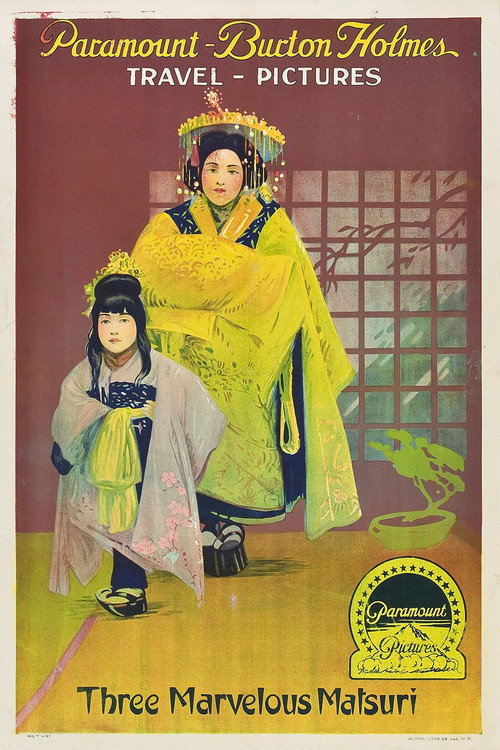
Three Marvelous Matsuri 1917
Captured in vibrant early-20th-century color, *Three Marvelous Matsuri (1917)* is a fascinating travelogue that transports viewers to the heart of traditional Japanese festivals.
Frequently Asked Questions
What is Three Marvelous Matsuri (1917) about?
This early travelogue documents three traditional Japanese festivals, showcasing their rituals, colors, and cultural significance through rare early-20th-century footage. The film captures the energy of communities celebrating matsuri with lively processions and local customs.
Who directed Three Marvelous Matsuri?
Director information is not available.
Who stars in Three Marvelous Matsuri?
The film features an uncredited cast, as was common for documentaries of this era.
Is Three Marvelous Matsuri (1917) worth watching?
As a historical and cultural document, *Three Marvelous Matsuri* offers unique insight into early Japanese festivals. While its silent format and uncredited crew may limit its appeal to modern audiences, it remains a fascinating watch for history and cinema enthusiasts.
How long is Three Marvelous Matsuri?
Runtime details are not listed.
About Three Marvelous Matsuri (1917) — A Vibrant Early Travelogue of Japanese Festivals
Captured in vibrant early-20th-century color, *Three Marvelous Matsuri (1917)* is a fascinating travelogue that transports viewers to the heart of traditional Japanese festivals. This silent documentary offers a rare glimpse into the customs, rituals, and communal joy of early Shōwa-era matsuri, where lantern-lit processions, spirited drumming, and local delicacies come alive under the lens of an unknown but skilled filmmaker. The film's atmospheric visuals and immersive pacing make it a treasure for history buffs and culture enthusiasts alike, blending ethnographic detail with a subtle sense of wonder.
As one of the earliest surviving records of Japanese festival culture, *Three Marvelous Matsuri (1917)* stands as both a historical artifact and a cinematic curiosity. Though the director and cast remain uncredited, the film's rich tapestry of local traditions—from shrine ceremonies to spirited dances—creates an enduring portrait of community spirit. Shot in the nascent days of color cinematography, its hues and compositions carry a nostalgic charm that lingers long after the final frame fades.