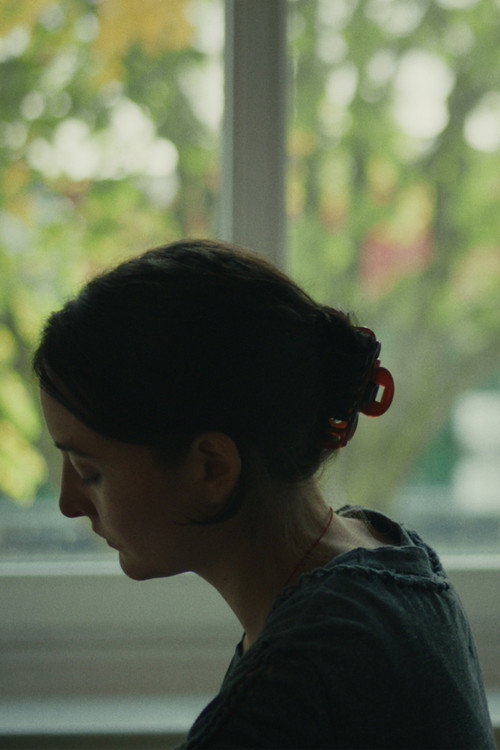
You Say That You’re Staying at the Party Because You’re Having Fun 2026
In *You Say That You're Staying at the Party Because You're Having Fun (2026)*, director Siri Hammarén crafts a hauntingly minimalist drama that unfolds in the stark confines of a Danish courtroom.
Director: Siri Hammarén
Cast
Frequently Asked Questions
What is *You Say That You're Staying at the Party Because You're Having Fun* (2026) about?
The film follows a young woman in a Danish courtroom whose own testimony is recited to her in Danish and then translated into German by an interpreter. The act of hearing her story in two languages forces her to confront its meaning in a deeply personal way, revealing layers of alienation and self-reflection.
Who directed *You Say That You're Staying at the Party Because You're Having Fun*?
The film is directed by Siri Hammarén, whose minimalist approach creates a tense, atmospheric narrative centered on linguistic and emotional detachment.
Who stars in *You Say That You're Staying at the Party Because You're Having Fun*?
The cast features Judith Winter in the lead role, delivering a powerful performance as the protagonist navigating the courtroom's unsettling dynamics.
Is *You Say That You're Staying at the Party Because You're Having Fun* (2026) worth watching?
For fans of slow-burn dramas that explore identity and perception, this 26-minute film offers a compelling, if challenging, experience. Its unique narrative structure and strong performances make it a standout in the genre, though its brevity may not appeal to all viewers.
How long is *You Say That You're Staying at the Party Because You're Having Fun*?
The film has a runtime of 26 minutes.
About You Say That You're Staying at the Party Because You're Having Fun (2026) — A courtroom drama about identity and translation
In *You Say That You're Staying at the Party Because You're Having Fun (2026)*, director Siri Hammarén crafts a hauntingly minimalist drama that unfolds in the stark confines of a Danish courtroom. The story centers on a young woman whose own words are recited back to her in a chilling act of linguistic and emotional detachment. First delivered by a judge in Danish, her testimony is then translated into German by an interpreter, forcing her to hear her story—twice, in two different languages and voices. This layered approach to narration blurs the line between recollection and reflection, creating an atmosphere of disorientation and introspection that lingers long after the screen fades. The film's restrained visuals and deliberate pacing amplify its themes of alienation and the fragility of self-perception.
Judith Winter delivers a quietly devastating performance as the protagonist, her blank stare and controlled expressions masking the weight of her narrative. Hammarén's direction eschews melodrama in favor of a raw, almost documentary-like realism, turning the courtroom into a stage for existential reckoning. The juxtaposition of languages underscores the disconnect between truth and its retelling, while the protagonist's struggle to reconcile her own voice with its mediated form invites viewers to question the reliability of memory and the stories we tell ourselves. A short but impactful film, it's a meditation on identity, justice, and the quiet battles we wage in silence.