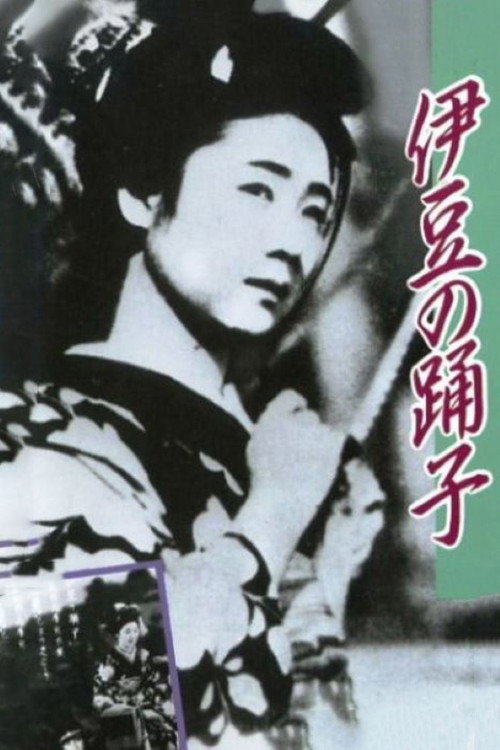
The Dancing Girl of Izu 1933
Immerse yourself in the poetic charm of *The Dancing Girl of Izu (1933)*, a delicate romance-drama directed by Heinosuke Gosho. The film weaves a tender tale around a wandering university student who crosses paths with a troupe of itinerant dancers on Japan's Izu Peninsula.
Director: Heinosuke Gosho
Cast

Kinuyo Tanaka
Kaoru, a dancer

Den Obinata
Mizuhara, a student

Tokuji Kobayashi
Eikichi, brother of Kaoru
Kinuko Wakamizu
Chiyoko, the wife
Takeshi Sakamoto
Hattori

Chōko Iida
Geisha
Eiko Takamatsu
Otatsu, the mother
Shizue Hyōdō
Yuriko, an emplyee

Jun Arai
Zenbei, master of 'Yukawarô'

Ryoichi Takeuchi
Ryûichi, the son
Frequently Asked Questions
What is *The Dancing Girl of Izu (1933)* about?
This elegant drama follows a university student traveling the Izu Peninsula who encounters a family of traveling dancers. Among them is their youngest daughter, whose purity and charm draw him in, leading to a brief but profound connection that lingers long after they part ways.
Who directed *The Dancing Girl of Izu*?
Heinosuke Gosho, one of Japan's pioneering directors known for his sensitive portrayals of human relationships, brought this tender tale to life.
Who stars in *The Dancing Girl of Izu*?
The film features Kinuyo Tanaka as the graceful young dancer, alongside Den Obinata, Tokuji Kobayashi, Kinuko Wakamizu, and Takeshi Sakamoto in pivotal roles.
Is *The Dancing Girl of Izu (1933)* worth watching?
With its heartfelt blend of romance and melancholy, *The Dancing Girl of Izu* offers a moving experience for fans of classic Japanese cinema. Its poetic storytelling and understated performances make it a rewarding watch, even nearly a century after its release.
How long is *The Dancing Girl of Izu*?
The film runs for 94 minutes, or approximately 1 hour and 34 minutes.
About The Dancing Girl of Izu (1933) — A Poetic Tale of Youth and Transience
Immerse yourself in the poetic charm of *The Dancing Girl of Izu (1933)*, a delicate romance-drama directed by Heinosuke Gosho. The film weaves a tender tale around a wandering university student who crosses paths with a troupe of itinerant dancers on Japan's Izu Peninsula. Among them is the youngest daughter, whose innocence and grace captivate him, sparking a fleeting yet unforgettable connection. As their brief time together unfolds against the backdrop of coastal villages and misty landscapes, themes of transience, youth, and the bittersweet nature of fleeting encounters take center stage.
Starring the luminous Kinuyo Tanaka and Den Obinata, *The Dancing Girl of Izu (1933)* blends soft melancholy with quiet beauty, embodying the essence of 1930s Japanese cinema. Its understated storytelling and evocative visuals capture a moment frozen in time, where romance blossoms only to dissolve like the morning mist. A hidden gem of early sound-era filmmaking, this drama resonates with anyone drawn to stories of fleeting love and the poignant passage of time.