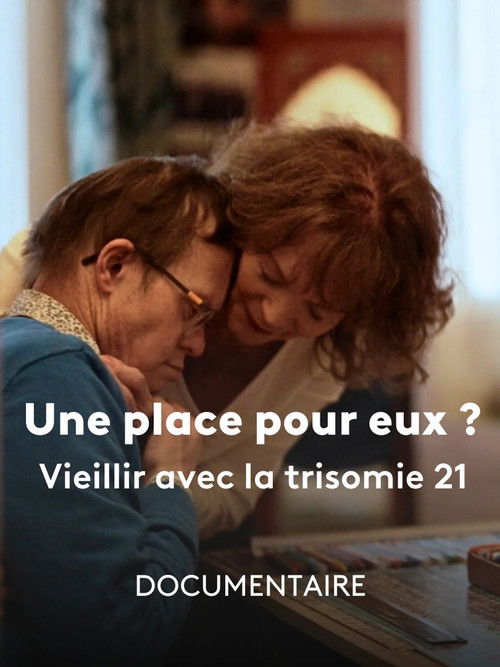
Une Place pour Eux ? Vieillir avec la Trisomie 21 2026
Directed by Dorothée Frénot, *Une Place pour Eux ? Vieillir avec la Trisomie 21* (2026) is a poignant documentary that casts a tender, insightful light on the often overlooked journey of aging adults with Down syndrome.
Director: Dorothée Frénot
Frequently Asked Questions
What is *Une Place pour Eux ? Vieillir avec la Trisomie 21* (2026) about?
This documentary follows the lives of adults with Down syndrome as they confront the complexities of aging, from healthcare struggles to the search for belonging. It's a heartfelt exploration of their resilience, dreams, and the societal changes needed to support them.
Who directed *Une Place pour Eux ? Vieillir avec la Trisomie 21*?
The film is directed by Dorothée Frénot, a filmmaker known for her sensitive and human-centered approach to documentary storytelling.
Who stars in *Une Place pour Eux ? Vieillir avec la Trisomie 21*?
While the full cast list isn't detailed, the documentary centers on real individuals with Down syndrome, their families, and caregivers, whose stories drive the narrative forward.
Is *Une Place pour Eux ? Vieillir avec la Trisomie 21* (2026) worth watching?
As a documentary that tackles timely and under-discussed themes, it's poised to resonate with viewers interested in social justice, healthcare advocacy, and heartfelt storytelling. Its focus on humanity and inclusion makes it compelling regardless of genre preferences.
How long is *Une Place pour Eux ? Vieillir avec la Trisomie 21*?
Runtime details are not listed for the film.
About Une Place pour Eux ? Vieillir avec la Trisomie 21 (2026) — A moving look at aging, inclusion, and neurodiversity
Directed by Dorothée Frénot, *Une Place pour Eux ? Vieillir avec la Trisomie 21* (2026) is a poignant documentary that casts a tender, insightful light on the often overlooked journey of aging adults with Down syndrome. Through intimate storytelling, the film explores themes of belonging, dignity, and the societal shifts needed to embrace neurodiversity as these individuals navigate later stages of life. Frénot's lens captures the quiet resilience and vibrant personalities of her subjects, blending raw emotion with moments of unexpected joy. The documentary doesn't shy away from the challenges faced—whether in healthcare, family dynamics, or public perception—but instead frames them as opportunities for deeper connection and collective growth.
Set against the backdrop of modern societal conversations about inclusion, the film serves as both a mirror and a call to action. It challenges viewers to reconsider what 'place' truly means for those who've spent their lives fighting to be seen. With a sensitive yet unflinching approach, *Une Place pour Eux ? Vieillir avec la Trisomie 21* invites audiences into a world where love, patience, and community redefine the very notion of growing older together.