Pan 697 1974
Hollis Frampton's *Pan 697* (1974) delivers a stark, unflinching glimpse into the realities of industrial meat processing within a mere 60 seconds.
Director: Hollis Frampton
Frequently Asked Questions
What is Pan 697 (1974) about?
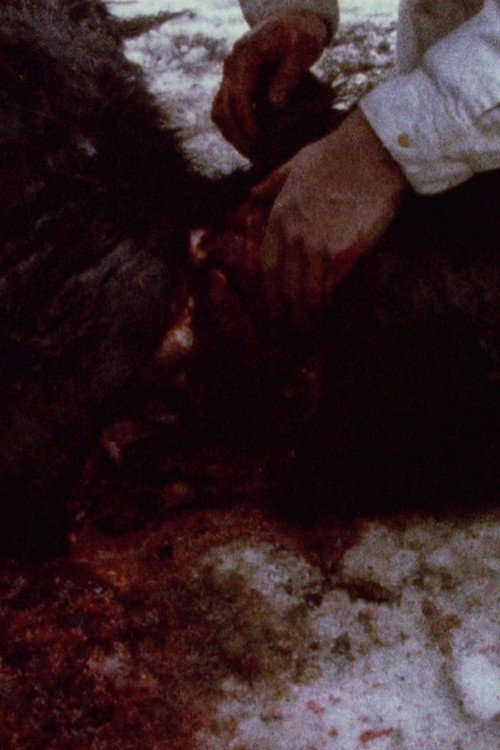
Hollis Frampton's *Pan 697* captures the stark, unfiltered act of a cow being decapitated in a butcher's workshop. The film's minimalist approach presents this industrial process with clinical detachment, stripping away any narrative or dramatic embellishment.
Who directed Pan 697?
The film was directed by Hollis Frampton, a pioneering figure in experimental and avant-garde cinema known for his innovative approaches to visual storytelling.
Who stars in Pan 697?
Director information is not available.
Is Pan 697 (1974) worth watching?
*Pan 697* is a polarizing short that will likely appeal to fans of experimental or documentary cinema rather than mainstream audiences. Its one-minute runtime and uncompromising subject matter make it a niche viewing experience, but it offers a fascinating glimpse into Frampton's provocative style.
How long is Pan 697?
The film runs for exactly 1 minute.
About Pan 697 (1974) — A 60-Second Shock of Raw Documentary Filmmaking
Hollis Frampton's *Pan 697* (1974) delivers a stark, unflinching glimpse into the realities of industrial meat processing within a mere 60 seconds. This short documentary strips away any pretense of artifice, capturing the visceral act of a cow being decapitated in a butcher's workshop. Frampton's minimalist approach strips the scene of melodrama, instead presenting the moment as raw documentation. The film's brevity amplifies its impact, forcing viewers to confront the immediate and unfiltered nature of its content.
The film's title itself—*Pan 697*—lacks the dramatic flair often associated with cinema, yet it serves as a quiet nod to the industrial numbering systems that categorize the mundane and the macabre alike. As a work of experimental documentary filmmaking, *Pan 697* challenges audiences to question the boundaries between observation and exploitation, all while maintaining an unmistakable sense of clinical detachment. For cinephiles and critics alike, Frampton's short stands as a provocative study in visual storytelling and ethical representation.