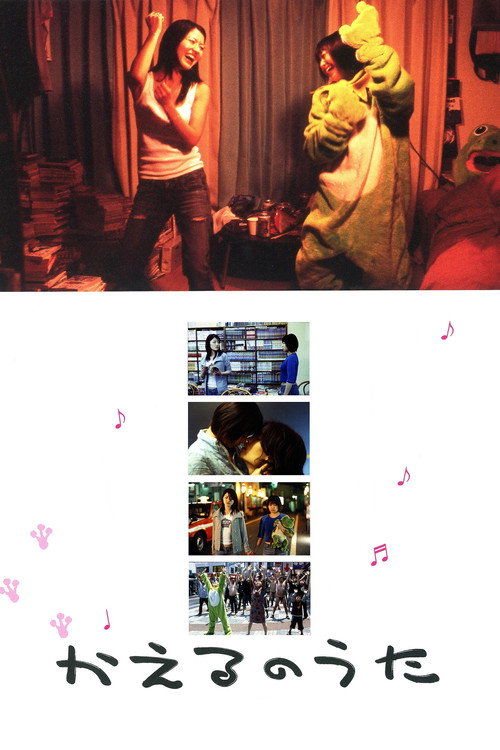
Frog Song 2005
Frog Song (2005) is a poignant Japanese drama that explores the fragile bonds of friendship and self-discovery after betrayal.
Director: Shinji Imaoka
Cast





Frequently Asked Questions
What is Frog Song (2005) about?
Frog Song (2005) follows Akemi, a woman who flees her cheating husband and finds comfort in a comic shop, where she meets Kyoko, an artist who introduces her to a world of sensual exploration. As Akemi grapples with the pull of her past, their bond becomes a delicate dance between freedom and familiarity.
Who directed Frog Song?
Frog Song was directed by Shinji Imaoka, a filmmaker known for his intimate and often provocative Japanese dramas.
Who stars in Frog Song?
The film stars Rinako Hirasawa as Kyoko Ito, Konatsu as Akemi Kudo, alongside Takeshi Itō, Yohta Kawase, and Kurumi Nanase in pivotal roles.
Is Frog Song (2005) worth watching?
While unrated on IMDb, Frog Song (2005) offers a compelling, intimate drama for fans of character-driven films. Its exploration of betrayal, healing, and sensual awakening makes it a unique entry in the genre, though it may not appeal to all viewers.
How long is Frog Song?
Frog Song (2005) has a runtime of 65 minutes.
About Frog Song (2005) — A Bittersweet Journey of Friendship and Liberation
Frog Song (2005) is a poignant Japanese drama that explores the fragile bonds of friendship and self-discovery after betrayal. Directed by Shinji Imaoka, the film follows Akemi Kudo (played by Konatsu), a woman who leaves her unfaithful husband and finds temporary solace in a quirky comic-book shop. There, she meets Kyoko Ito (Rinako Hirasawa), an aspiring manga artist whose uninhibited spirit introduces Akemi to a world of sensual liberation—one that challenges her lingering attachment to her past. As Akemi weighs the comfort of familiarity against the allure of newfound freedom, their friendship teeters on the edge of both promise and peril.
Set against the backdrop of urban Japan, Frog Song (2005) blends intimate drama with subtle eroticism, capturing the raw emotions of healing and reinvention. Imaoka's direction infuses the narrative with a melancholic yet hopeful tone, emphasizing the fleeting nature of human connections. With its short runtime and emotionally charged performances, this understated gem invites viewers to reflect on the choices that shape our lives.