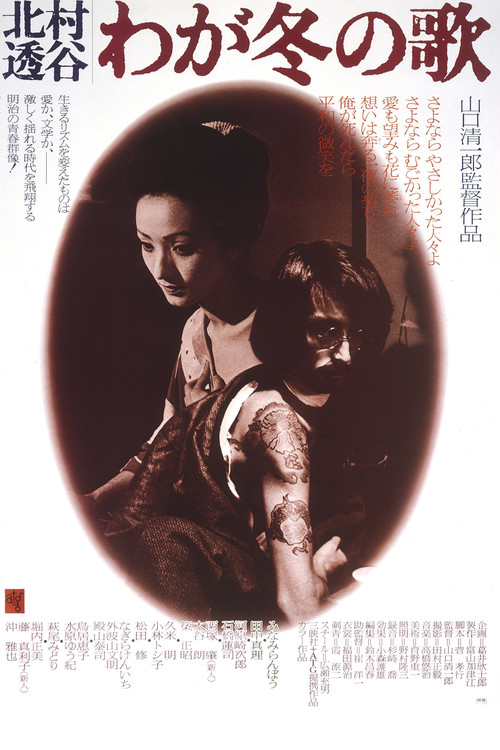
Kitamura Tokoku: My Winter Song 1977
Released in 1977, *Kitamura Tokoku: My Winter Song* is a poignant biographical drama directed by Seiichirō Yamaguchi that places you right in the heart of late 19th-century Japan.
Director: Seiichirō Yamaguchi
Cast



Frequently Asked Questions
What is Kitamura Tokoku: My Winter Song (1977) about?
This biographical drama follows Kitamura Tokoku, a poet and activist recovering from a suicide attempt on New Year's Day 1894. As his militant comrades and literary friends visit him during a time of rising patriotism, Tokoku reflects on his stormy past—his struggles with love, his defiance of authority, and the ideals that once burned bright before fading into doubt.
Who directed Kitamura Tokoku: My Winter Song?
Seiichirō Yamaguchi directed the film, skillfully blending historical drama with intimate emotional storytelling.
Who stars in Kitamura Tokoku: My Winter Song?
The film features a powerful ensemble cast led by Ranbô Minami, Mari Tanaka, Renji Ishibashi, Mariko Fuji, and Jiro Kawarazaki, each bringing depth to this introspective tale.
Is Kitamura Tokoku: My Winter Song (1977) worth watching?
While not widely rated, this quiet, character-driven drama offers a rewarding glimpse into late Meiji-era Japan. Its themes of political disillusionment, love, and redemption resonate strongly for fans of historical biopics and introspective storytelling. If you're drawn to understated yet profound cinema, this 103-minute meditation deserves your attention.
How long is Kitamura Tokoku: My Winter Song?
The film has a runtime of 103 minutes, offering a focused and immersive viewing experience.
About Kitamura Tokoku: My Winter Song (1977) — A Forgotten Poet's Path to Redemption
Released in 1977, *Kitamura Tokoku: My Winter Song* is a poignant biographical drama directed by Seiichirō Yamaguchi that places you right in the heart of late 19th-century Japan. Set on New Year's Day 1894, the film opens with Kitamura Tokoku convalescing after a deep personal crisis—his attempt at suicide. As the nation roils with nationalist fervor ahead of war with China, his literary friends and militant allies come knocking, unsure why a man who once fought passionately for civil rights now wants to end it all. From these hesitant reunions blooms a reflection on lost ideals, tumultuous relationships, and the weight of history.
Through delicate flashbacks and quiet introspection, the story weaves together Tokoku's fiery political activism, his complicated love life, and the crushing isolation of a man caught between personal despair and national expectation. Yamaguchi crafts an atmosphere of quiet intensity, where every gesture and whispered word feels charged with unspoken emotion. It's a story about letting go, about rediscovering purpose, and about the cost of believing too deeply in causes that no longer believe in you back.