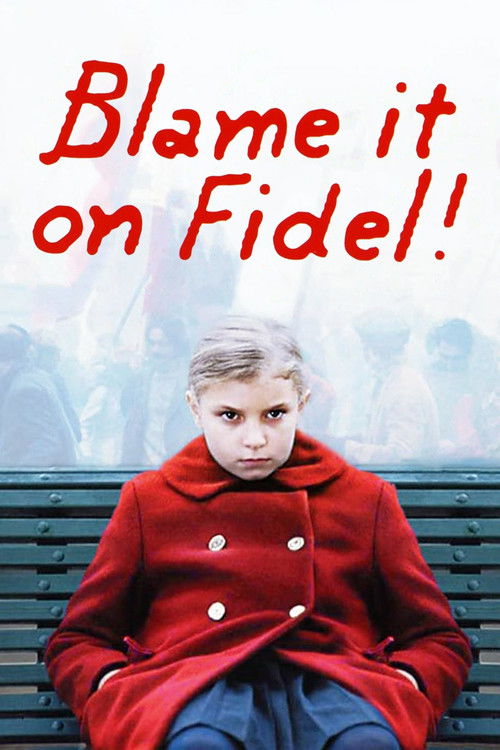
Blame It on Fidel! 2006
Set in the politically charged atmosphere of early 1970s Paris, *Blame It on Fidel!* (2006) follows the gripping transformation of a young girl's world when her once-staid parents suddenly embrace radical activism.
Director: Julie Gavras
Cast







Frequently Asked Questions
What is Blame It on Fidel! (2006) about?
The film follows nine-year-old Anna as her parents abandon their conventional lifestyle to join the radical political movements sweeping 1970s Paris. As their home becomes a hub for activists, Anna struggles to reconcile her parents' newfound ideals with the familiar rhythms of family life.
Who directed Blame It on Fidel!?
The film was directed by Julie Gavras, known for her insightful storytelling and nuanced character studies.
Who stars in Blame It on Fidel!?
The film features Julie Depardieu, Nina Kervel-Bey, Stefano Accorsi, and Martine Chevallier in pivotal roles.
Is Blame It on Fidel! (2006) worth watching?
Though unrated on IMDb, the film's emotional depth and historical backdrop make it a compelling watch for fans of character-driven dramas. Its blend of political tension and personal growth offers a resonant, thought-provoking experience.
How long is Blame It on Fidel!?
The runtime is 99 minutes.
🎥 Trailer
About Blame It on Fidel! (2006) — A Family Caught Between Revolution and Childhood
Set in the politically charged atmosphere of early 1970s Paris, *Blame It on Fidel!* (2006) follows the gripping transformation of a young girl's world when her once-staid parents suddenly embrace radical activism. Directed by Julie Gavras, the film blends history and drama as nine-year-old Anna navigates the chaos of her family's upheaval, from shifting household rules to whispered conversations about revolution. The story captures the tension between childhood innocence and the turbulent ideals of the era, where political fervor clashes with domestic stability. With a stellar cast led by Julie Depardieu and Nina Kervel-Bey, the film paints a vivid portrait of a family caught between personal comfort and societal change, all while maintaining an emotional core that resonates long after the credits roll.
The movie masterfully contrasts the warmth of family bonds with the cold realities of political conviction, making it a compelling watch for fans of character-driven dramas. Gavras' direction infuses the narrative with authenticity, grounding Anna's perspective in a world where even the simplest pleasures—like a family dinner—become charged with ideological weight. A poignant exploration of loyalty, identity, and the ripple effects of activism, *Blame It on Fidel!* (2006) is both a time capsule of a pivotal historical moment and a timeless story of growing up amid uncertainty.